
News, stories and insights
October 29th 2026
A shared yardstick for the Microfiber Action Alliance
Coalition fatigue is often blamed on politics, competing agendas or too many meetings. Follow-up also fails when members never agreed on how progress is counted.
As technical partner of the Microfiber Action Alliance, convened by The Nature Conservancy, EA provides the shared methodology, emission factors and baseline tool that let every brand measure the same way. The article explains how data quality scores and a versioning rule keep baselines credible as the science improves, and what brands can do now.
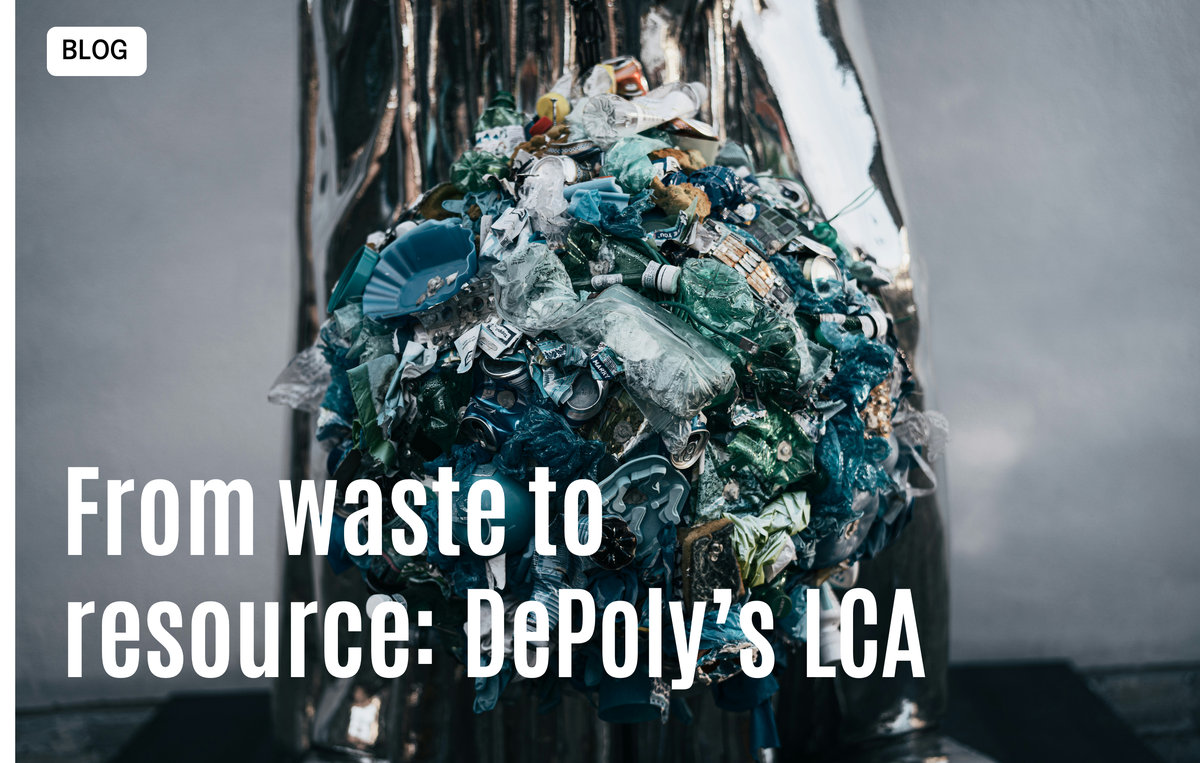
From waste to resource: what an LCA says about DePoly’s PET recycling
Turning waste into a resource sounds like a clear environmental win. For chemical recycling, that claim needs numbers.
EA supported DePoly, a Swiss company that recycles PET waste conventional recycling struggles to handle, in a life cycle assessment. At showcase scale, a bottle made from its recycled monomers has a modelled carbon footprint 14% below virgin PET without end of life credits, and about 45% below with them.
The piece also looks at what the assessment checked beyond carbon, where the main hotspots sit, and what quantified results mean for a company planning a plant 100 times the size of its showcase plant.
Avoided emissions: recognizing climate action without losing touch with reality
Many companies cut emissions outside their value chain, and their carbon footprint does not show it. A grid operator investing in its territory’s decarbonisation can even see its own footprint rise. The GHG Protocol’s future Actions and Market Instruments (AMI) standard would add separate statements alongside the physical inventory, including one for contractual instruments and one for the impact of a company’s actions beyond its own inventory, measured against a baseline.
The consultation drew over 400 responses, and final publication is expected in late 2028. The open question is the baseline: an avoided emission is the difference with a scenario that never happened. Marguerite Fauroux looks at how existing methods handle it, the drifts already seen with Scope 2 certificates, and what the territorial scale makes it possible to verify.
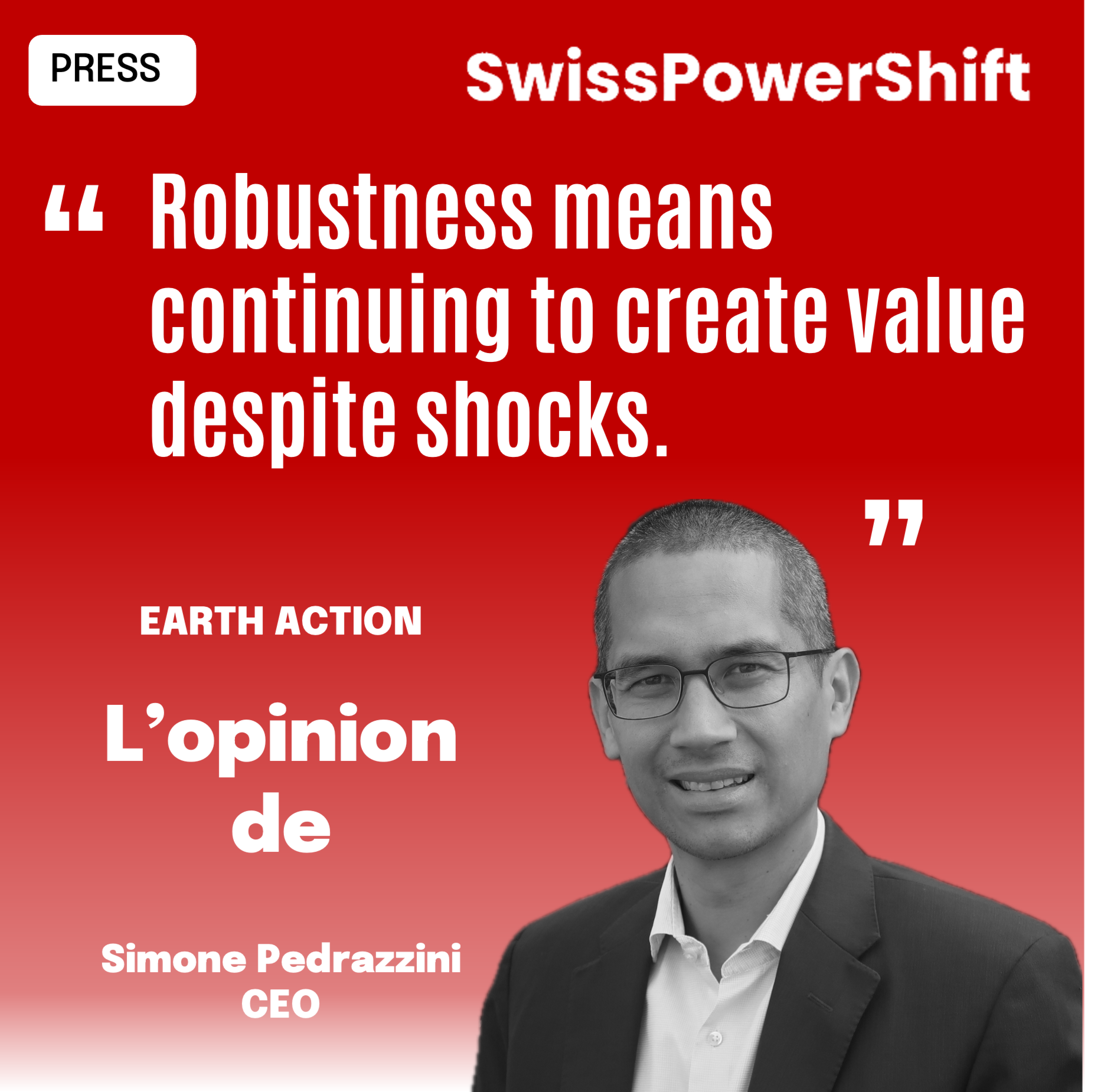
Simone Pedrazzini in SwissPowerShift: robustness as the next Swiss strength
In an op-ed for SwissPowerShift, Simone Pedrazzini, CEO of Earth Action, argues that robustness, a company’s ability to keep operating and creating value through shocks, could become the next strength of “Made in Switzerland”. His example is watchmaking, where supply chains are complex and subcontractors play a central role.
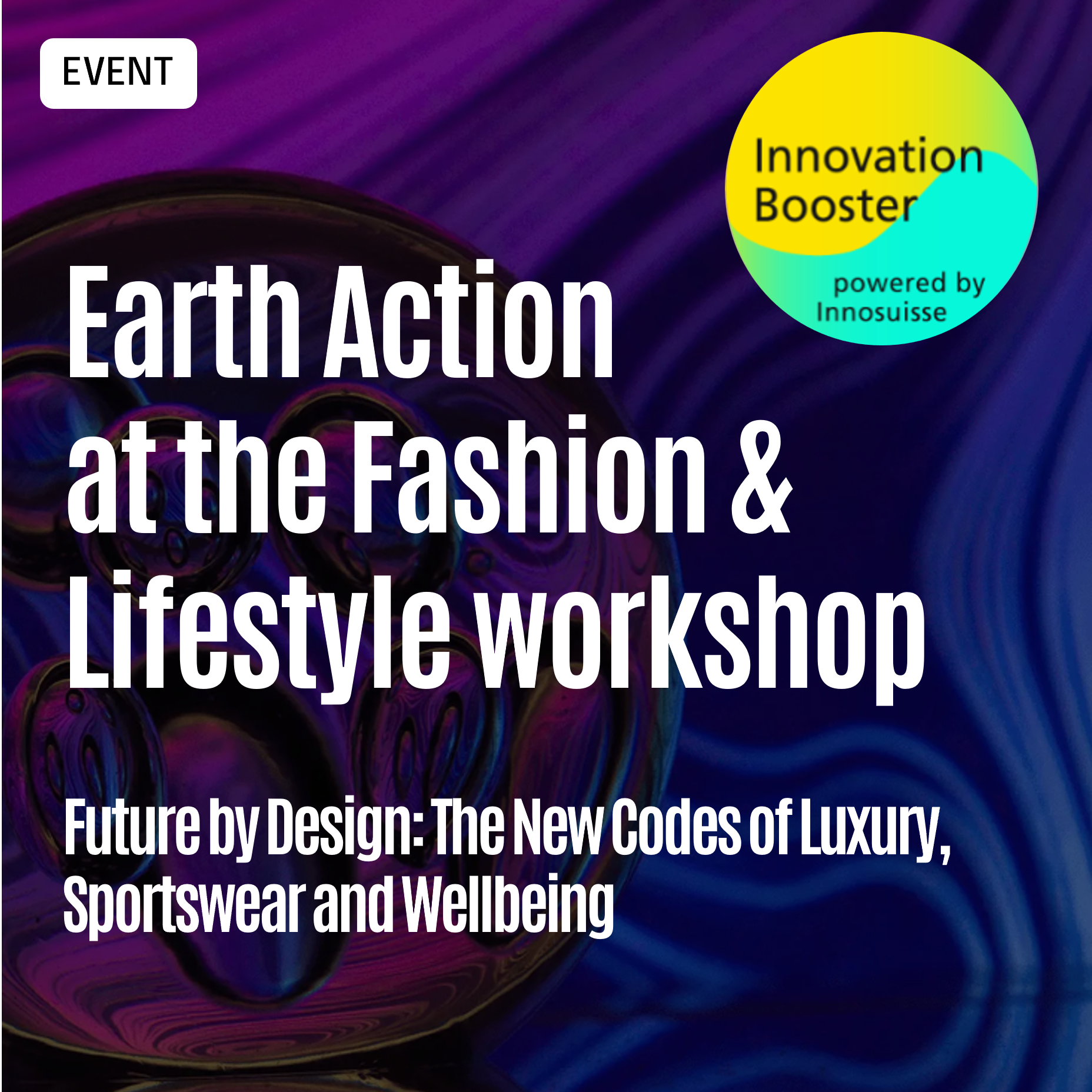
Earth Action at the Innovation Booster Fashion & Lifestyle
On 13 October, Earth Action took part in Challenge Your Ideas #2 at EPFL in Lausanne, the co-creation workshop of the Innovation Booster Fashion & Lifestyle, where 24 Swiss innovation teams worked on the call “Future by Design: The New Codes of Luxury, Sportswear and Wellbeing”.
Powered by Innosuisse, the programme pairs implementation partners with academic partners. Earth Action joined with several project proposals. The projects now go before a jury, and up to five will receive a prize to test their concepts.
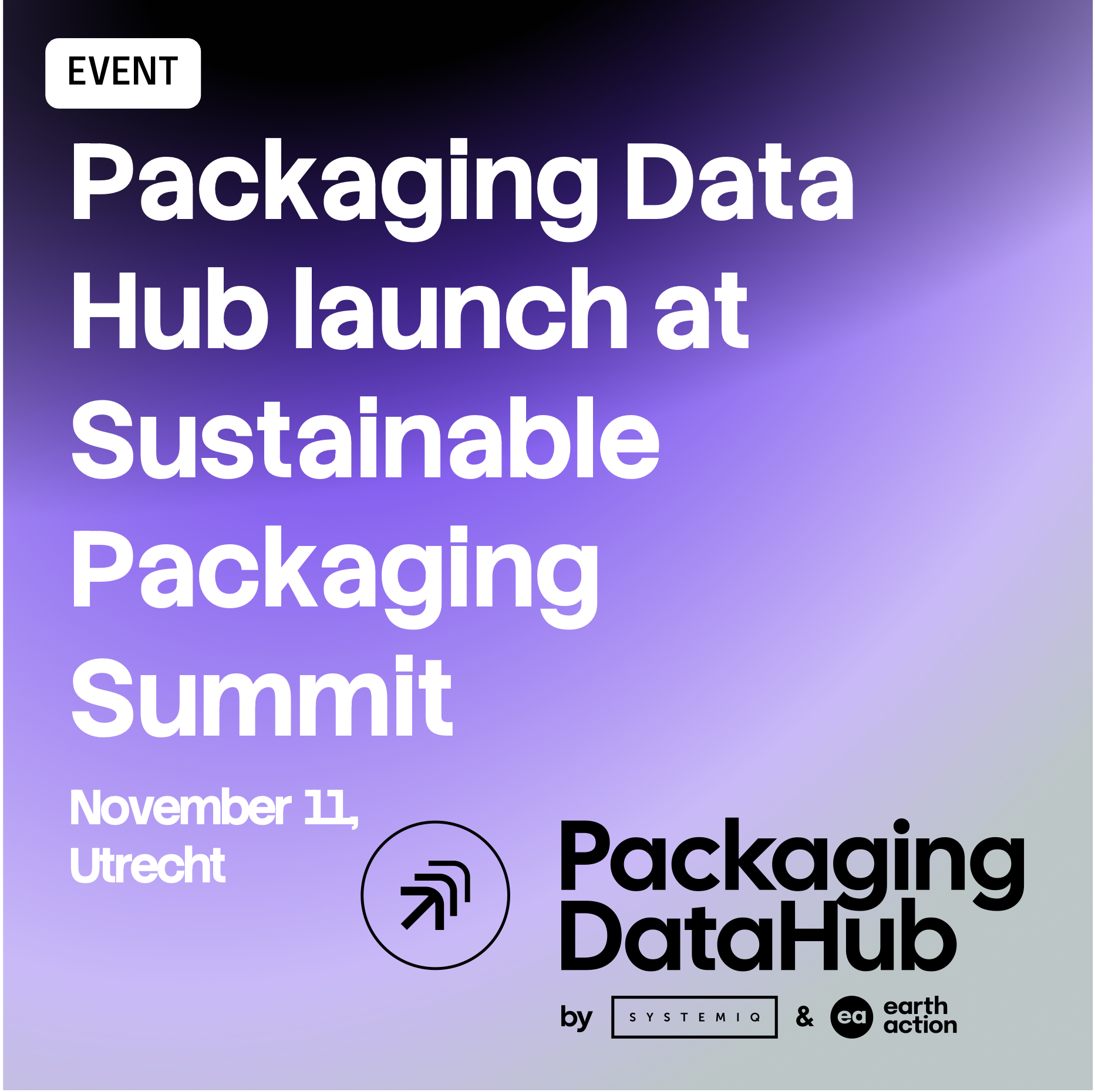
The Packaging Data Hub launches in Utrecht
Packaging Europe’s Sustainable Packaging Summit takes place from 10 to 12 November in Utrecht. It brings together the packaging value chain, from global brands and startups to investors, policymakers and scientists. Earth Action will be there with Systemiq for the global launch of the Packaging Data Hub, on the main stage on 11 November at 16:20.
The Packaging Data Hub provides a new, shared source of credible, comparable recycling data for plastic packaging, helping companies focus circularity action and investment, prepare for evolving regulatory requirements and report with confidence.
If you are attending, get in touch with the team on site and come visit the booth to discuss what happens to your packaging after use, across markets and formats: Jean-Baptiste Bayart, Riccardo De Gennaro, Yoni Shiran, Jose de la Fuente and Clare Cocker. Reach out at contact.ea@e-a.earth or plastic@systemiq.earth.
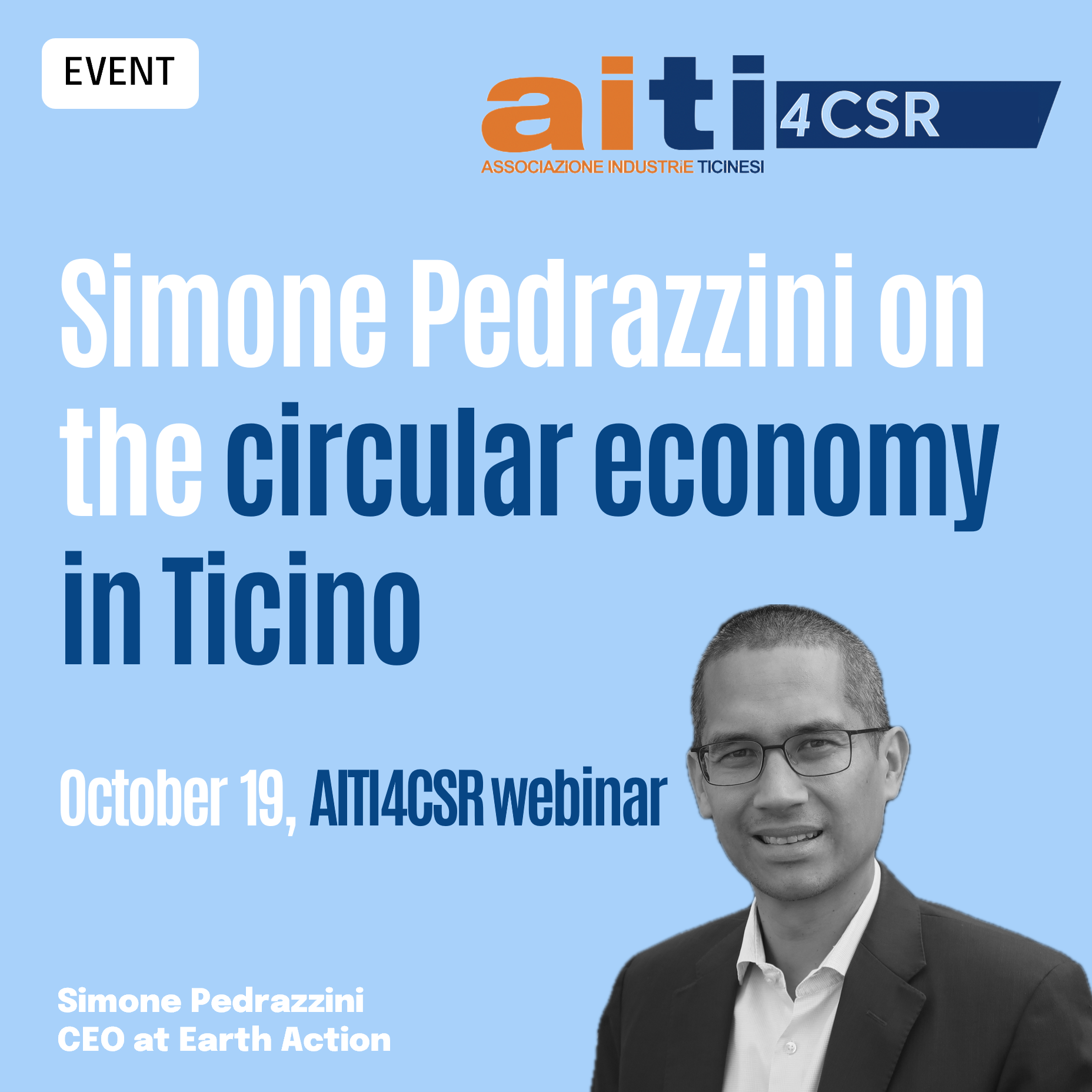
AITI4CSR: circular economy as a business opportunity in Ticino
On 19 October, Simone Pedrazzini, CEO of Earth Action, gave the third and final webinar of the AITI4CSR series on waste, organised by AITI, the association of Ticino industries. Where the first two sessions covered practical waste management and the legal framework, he looked ahead to business opportunities.
Drawing on EA’s work with companies on life cycle assessment, Simone covered what circular economy regulations require, why more companies use LCA to create business value, and how a new circular supply chain takes shape, with Ticino case studies from pharma, medtech, construction, energy and precision mechanics. Antonio Puntello, Vice President Global Sustainability at Timex Group, closed the session with a company testimony.
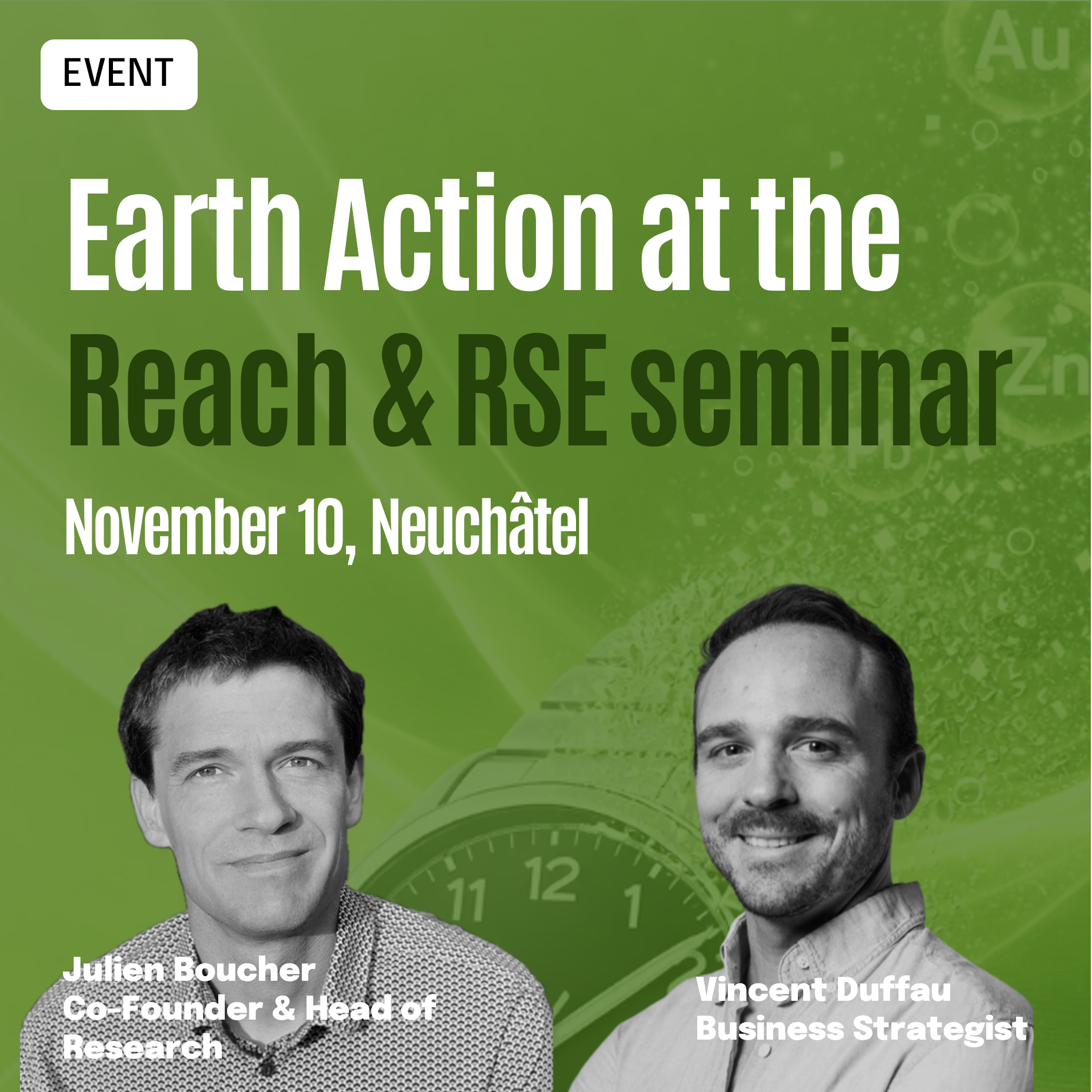
Reach & RSE seminar, Neuchâtel
On 10 November, Julien Boucher, co-founder of Earth Action, and Vincent Duffau, Business Strategist, will speak at the INFOMAT seminar Reach & RSE at the Hotel Beaulac in Neuchâtel. Their talk, “Creating commons to accelerate the watchmaking sector’s transition”, draws on Earth Action’s work with brands and suppliers on shared methodologies, tools and emission factors for the sector.
The day brings together eight talks for the watchmaking and microtechnology industries, from PFAS regulation to responsible gold, with time for networking. Registration is open: come and meet us there.

e-Luxury Summit 2026, Lausanne
On 24 November, Simone Pedrazzini, CEO of Earth Action, will moderate the round table “Sustainability as a lens for a stronger value chain” at the e-Luxury Summit 2026, held at IMD in Lausanne. With Valentina Villani, Regulatory, Product Safety & Environment Director at Bulgari (Perfume Business Unit), Pauline Evequoz, Global Head of Corporate Sustainability at Chopard, and Francesca Rena, Investment Director at Vam Investments, he will explore how maisons use sustainability to gain visibility over their suppliers and engage them on shared targets, and the challenges that remain.
EA still has a few exclusive invitations. If you would like to attend, contact Simone.

Forum Romand de l’Énergie 2026, Ecublens
On 26 November, EA will attend the Forum Romand de l’Énergie at the SwissTech Convention Center in Ecublens. Titled “L’énergie de demain : locale, stable, flexible”, the 2026 edition covers security of supply, local renewable production, grid stability, local electricity communities and storage, through field examples and practical experience.
Energy is becoming an important pillar of EA’s activity, and these topics cut across several of its strategic axes. EA plays a role with its clients, and equally with the sector and the policy framework that supports it.
In Case You Missed It
Catch up on key reports, articles and consultations:
Paint is a major and underregulated source of microplastics, with construction and marine coatings identified as priority areas for treaty action
Paint: A key source of microplastics to the environment: Fate, effects, and mitigation strategies
A briefing by the Scientists’ Coalition for an Effective Plastics Treaty, led by University of Plymouth researchers, synthesises evidence on paint as a significant but overlooked source of micro and nanoplastics. Construction paints and marine antifouling coatings are identified as priority sources, with the briefing calling for paint to be explicitly addressed in plastics treaty negotiations. Read the article
Recycling recovers only 9% of plastic ever produced — and its political prioritisation is blocking more effective governance
The broken promise of plastic recycling: How the recycling narrative became a barrier to effective plastic governance
Published in Environmental Science & Policy, this analysis argues that recycling’s elevation to the organising principle of plastics policy has displaced upstream prevention and reuse measures. With the global recycling rate projected to reach only 17% by 2060, the study finds the failure lies not in recycling as a technique but in the economic structures that continue to reward virgin plastic production. Read the article
Microplastics detected across all vegan food categories tested in Spain, France, and Italy
Microplastics in Vegan Foods from Spain, France, and Italy: Quantification and Characterization Across Dairy Alternatives, Meat Substitutes, and Sauces
A pilot study sampling 15 commercially available vegan products across five categories in three countries detects microplastics in all categories tested, with concentrations varying by product type and country. Fibres and fragments are the dominant particle types. The findings extend documented microplastic food contamination to plant-based product categories previously understudied. Read the article
Microplastic exposure shown to affect reproductive health, fetal development, and aging across the life cycle
Microplastic exposure and human health risks across the life cycle: a focus on reproduction, development, and aging
A review in Frontiers in Cell and Developmental Biology finds accumulating evidence that microplastics affect reproductive health, pregnancy outcomes, and fetal development, and may accelerate aging through oxidative stress, inflammation, and endocrine disruption. The authors identify placental transfer as a key pathway and call for research prioritising long-term developmental exposure. Read the article
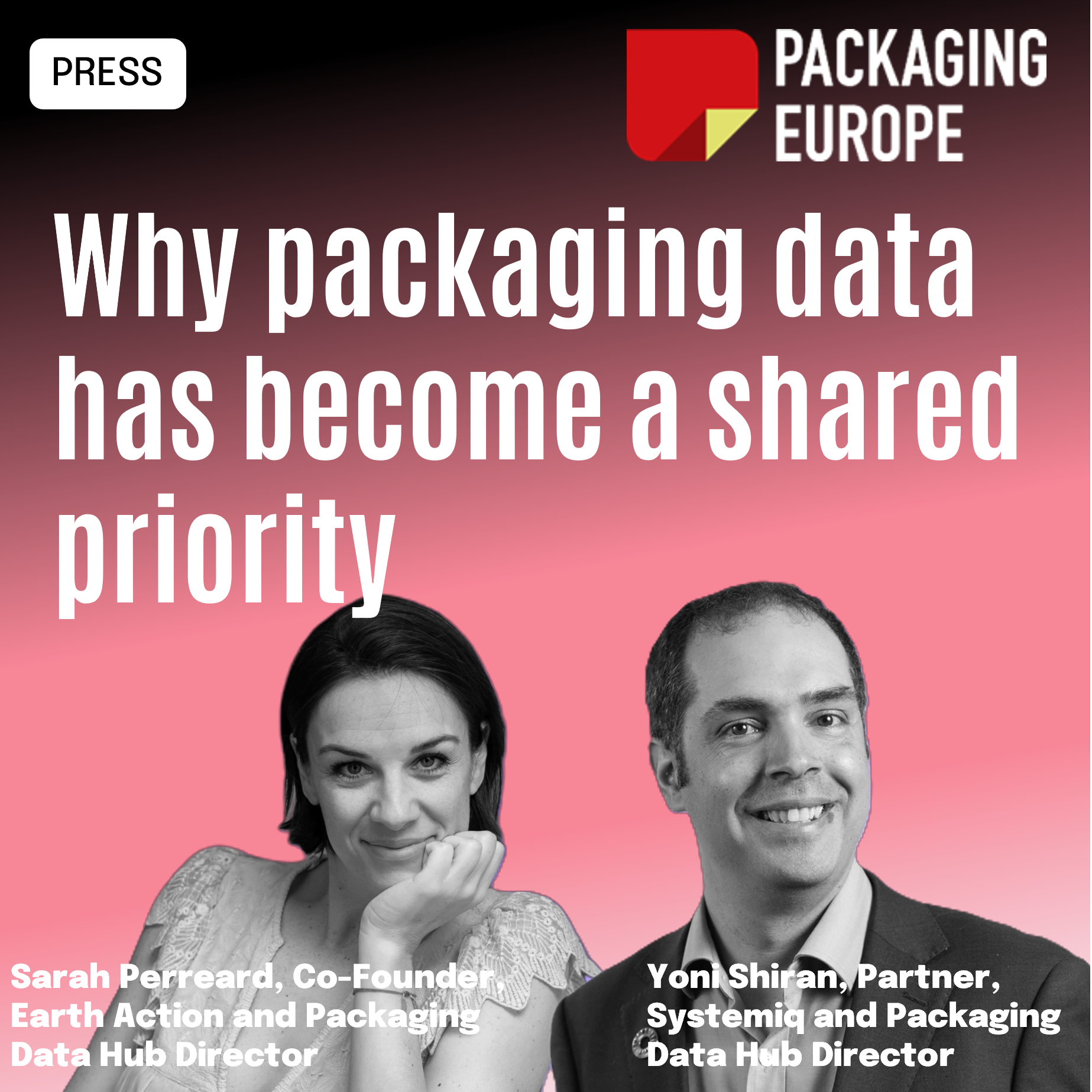
Packaging Europe: why packaging data has become a shared priority
In Packaging Europe, Sarah Perreard, co-founder of Earth Action, and Yoni Shiran of Systemiq bring together perspectives from the Ellen MacArthur Foundation, WWF, The Consumer Goods Forum and WRAP, members of the Packaging Data Hub Steering Committee, on what actually happens to packaging once it becomes waste.
Earth Action cited in Sourcing Journal
Sourcing Journal broke the news of the Microfiber Action Alliance this month, and Earth Action’s From Shedding to Solutions is part of the story. The article uses the report to show where microfibers are lost in textile manufacturing. The alliance’s goal is to act on those findings in the mills themselves.
On our radar
Beyond our own work, we track key policy moves, insights, and analysis shaping the sustainability agenda. This section spotlights external developments and perspectives we think are worth your attention.
October produced the first hard measures of whether commitments are translating into delivery.
The clearest came on biodiversity. On 15 October the UN Secretary-General launched the State of Biodiversity Action report, the first global assessment of progress under the Kunming-Montreal framework. Nearly 90 per cent of countries have set national targets, but fewer than half of the targets assessed are on track, with the gaps concentrated in finance, business action, harmful incentives and sustainable consumption. World leaders adopted the Yerevan Declaration on 16 October, and COP17 opened in Armenia on the 19th, running to 30 October.
Two EU rules started to bite. Since 27 September the Empowering Consumers Directive has banned vague green claims, self-awarded sustainability labels, and any claim that a product is carbon neutral when that rests on offsets bought outside the company’s own value chain. On 10 October a REACH restriction took effect on PFHxA, a PFAS used to make products water and grease resistant. It can no longer be present above trace levels in clothing, footwear, cosmetics, or the paper and cardboard that touches food.
In the United States, the Supreme Court heard Suncor v. Boulder on 5 October. The question is whether a city can sue oil companies in its own state’s courts for the local costs of climate change, or whether such claims belong exclusively to federal law and are therefore blocked. More than two dozen similar cases brought by US cities and states hang on the answer.
The Environment Council met on 12 October. Ministers held their first discussion of the Commission’s proposal to reshape the EU carbon market for the 2030s, and agreed the common position the EU will defend at the UN biodiversity summit now under way and at the climate summit in Antalya in November.

First “rendez-vous EA”, 11 November in Prilly
On 11 November at 8:30 am, EA hosts the first “rendez-vous EA” at its premises in Prilly, a breakfast for sustainability professionals in companies, administrations and institutions. The event will be held in French.
Titled “Le terrain a changé. Entre données et actions, ce que la réalité impose”, this first edition asks what field data changes in decisions, as glaciers retreat and supply chains come under strain. Glaciologist Jean-Baptiste Bosson (marge sauvage) opens the morning, followed by a round table with Declan Mc Adams (Pinovo), Myriam Emin (État du Valais) and Tanguy Moser (SBB CFF FFS).
A few places remain. If this speaks to you or your organisation, write to Simone Pedrazzini at simone.pedrazzini@e-a.earth.
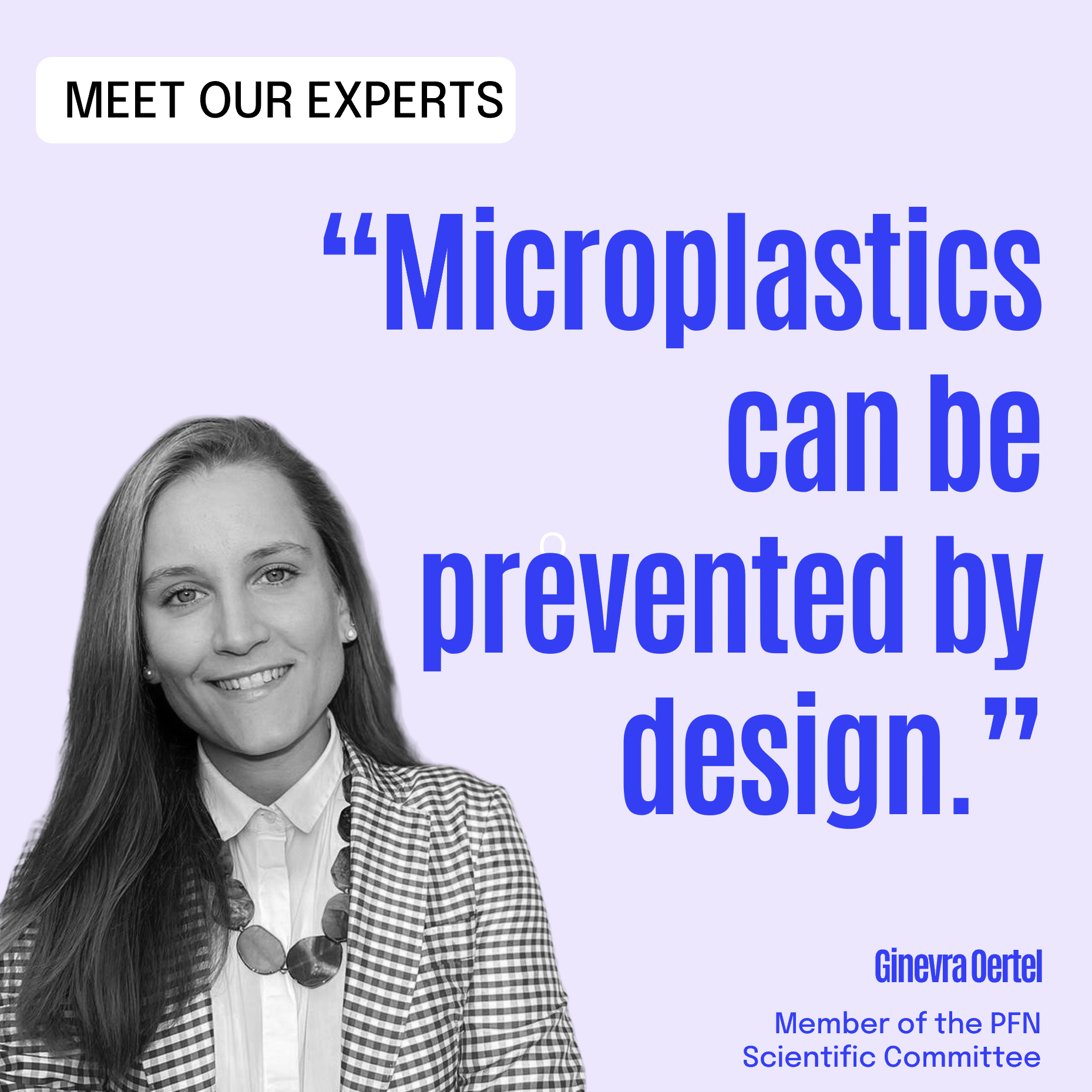
Prevented by design: insights from Ginevra Oertel on managing industrial microplastics
Ship paint is plastic, and a vessel is painted, repaired and repainted across its working life. Ginevra Oertel, PFN Scientific Committee member and researcher at NTNU Ålesund, spent her doctoral research following the microplastic particles that come off it, and asking which actors along the shipbuilding and repair chain could do something about them.
Her conclusion points two ways. Industrial microplastics are hard to measure because the methods have to be built source by source, and they go unmanaged because they belong to no existing function inside a company.
Her work puts them into risk, EHS and sustainability management, and her advice is to go further upstream still, to the design stage, where an emission can be prevented rather than monitored.

Welcome Fernanda!
Earth Action welcomes Fernanda Nunes, who recently joined the team as a Consultant and Data Specialist, based in Lausanne. Fernanda brings experience in data analysis, Python, ESG and carbon accounting.
After studying physics in Brazil, she earned a PhD in Computational Chemistry at the University of Zurich and co-authored more than ten scientific publications. At EA, she turns complex data into clear findings that clients can act on.

EA retreat: hiking, fondue and strategy
In September, the EA team swapped screens for mountain air at its annual retreat. The programme started with a hike up to a mountain cabin, followed by outdoor games and board games played by competitors as fierce as ever.
The evening continued with a fondue, then a sweet treat by the fire. Then came the strategy work, just as much fun: a series of workshops built around EA’s four pillars: clients, market, partners and team.
Thank you for reading the latest Earth Action Newsletter! If you found this issue valuable, please forward it to colleagues and invite them to subscribe!
Have ideas on how to make this newsletter more valuable to you? Let us know!


©EA – Earth Action SA
Lausanne, Ch. des Vignes d’Argent 7, 1004 Lausanne, Switzerland
You are getting this note because you subscribed to hear from Earth Action.
Don’t want to hear from us anymore? Unsubscribe