

News, stories and insights
June 25th 2026
The recycled polyester claim that’s about to become a liability
Here’s a sentence that has been repeated so often in this industry it stopped sounding like a claim and started sounding like a fact: made from recycled bottles. It shows up on hangtags, in sustainability reports, in marketing decks pitched to investors. For years, it has been the one line brands could lean on without a second thought, the safe claim, the easy win, the thing legal teams signed off on without blinking.
That confidence deserves a second look.
The research on how much recycled polyester sheds microfibers compared to virgin polyester is far messier than the marketing suggests, and some of the most recent findings point in worrying direction. At the same time, regulators are sharpening their definition of what counts as a substantiated environmental claim, and “recycled” is squarely in their sights. The two trends are converging fast, and brands that have not looked closely at this claim in a while are about to find out what “safe” really meant.
We dig into what the studies actually show, why weight-based shedding metrics might be telling an incomplete story, and what this means for any brand still treating recycled content as a free pass.

How a technical assessment enables better decision-making: A case study in watchmaking ecodesign
At EA, sustainability has to drive decisions — not just intentions. A lifecycle assessment we conducted with the Watchmaking Ecodesign consortium on component washing machines proved exactly that. By benchmarking 22 machines across 7 Swiss sites, we identified that oversized, underused equipment can generate up to 2,000× more impact per kilogram than an optimally loaded one.
The findings directly rewrote their procurement specifications and redirected capital investment. Technical rigor, turned into action. That’s ecodesign as it should work.
Turning constraints into climate leverage
In an accelerating energy transition, Romande Energie faces a structural challenge: reducing its own emissions while expanding activities that support customer decarbonisation. With support from EA, the Group developed a structured approach combining decarbonisation lever analysis, impact modelling, and internal workshops.
This process led to the identification of 190 solutions and the prioritisation of 45 concrete actions across key business areas. Beyond strategy, the initiative strengthens decision-making and execution capacity, aligning climate performance with operational reality and enabling faster, more informed action in a complex regulatory and energy environment.
Responsible Business Conduct in Watchmaking: Switzerland’s Industry Steps Up
Swiss watchmaking is moving toward sustainability, but not alone. This Swiss Association Quality (SAQ) article offers a clear-eyed panorama of a sector under growing regulatory pressure, where collective action is emerging as the essential condition for progress.
Julien Boucher, co-founder of Earth Action, articulates a sharp vision: ecodesign is not a compliance cost but a value creation equation. Improving a product means gaining in competitiveness, and when a brand fully owns that positioning, it will be a revolution for the industry.
That is precisely what the Watchmaking Ecodesign project is building: a shared foundation of granular data and methodologies, developed within a consortium, to turn environmental intentions into actionable decisions.

Stop waiting for perfect data. Start anyway.
Companies stuck between “we need better data” and “we need a clearer strategy” are taking on more risk, not less. In this joint interview, Earth Action and LeafTurtle compare notes on the most common mistakes they see on water and nature, why “doing the right thing” no longer moves budgets on its own, and what actually happens when measurement and strategy work together from day one.
A candid exchange between two teams who rarely agree to disagree.

Earth Action at PharmaDays: ecodesign at the heart of the conversation
EA was at PharmaDays in Geneva, where sustainability and ecodesign took centre stage across conferences and exchanges. Discussions pointed to a clear shift in the pharmaceutical sector toward earlier integration of environmental criteria in design phases, alongside a continued focus on decarbonising production sites, adopting bio-based materials, and targeted circularity.
Several sessions also addressed the growing momentum around LCA and emerging methodological frameworks, an area where EA supports organisations in the sector: deploying LCA at scale, but also removing the operational and governance barriers that still prevent these approaches from being embedded into product design and decision-making processes.
EPHJ Geneva – at the heart of precision watchmaking
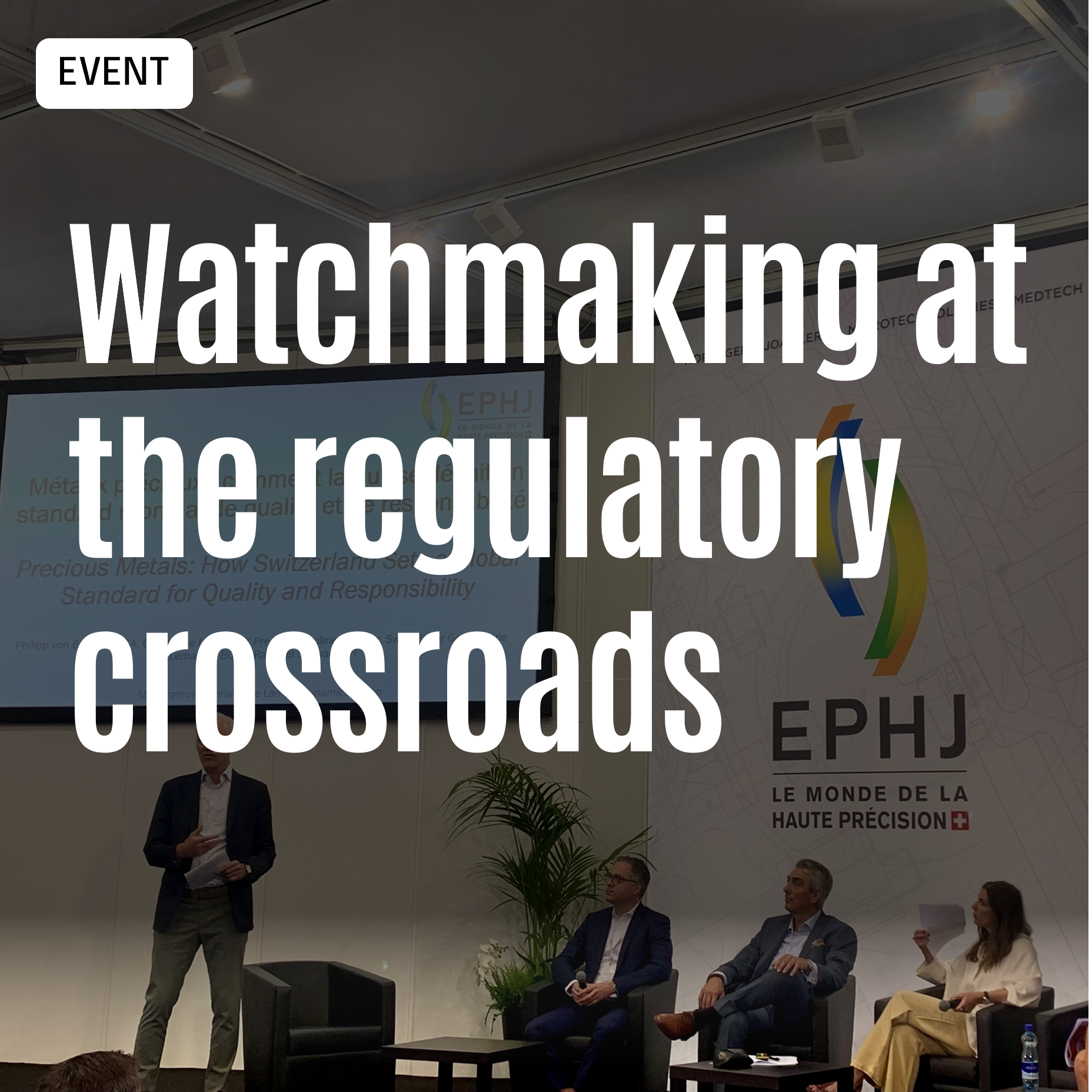
The annual gathering of precision microtechnology. Earth Action was there to reconnect with partner brands and suppliers, and to feed into the working groups it runs across the sector. Conversations revolved less around sustainability as such than around the risks — regulatory, reputational, market — that are closely tied to it. Supply chains are often willing partners, but stretched thin and pulled in many directions, against a backdrop of slower activity. That’s where EA comes in: bridging sector-level methodological work and its concrete implementation, turning these challenges into measurable impact.
A highlight of the edition: a G7-style panel bringing together representatives from the Chinese, Japanese, German and Swiss watch federations, among others. Contrasting realities, but a shared diagnosis: combining innovation with industrial know-how remains the condition for staying relevant in a world being reshaped.
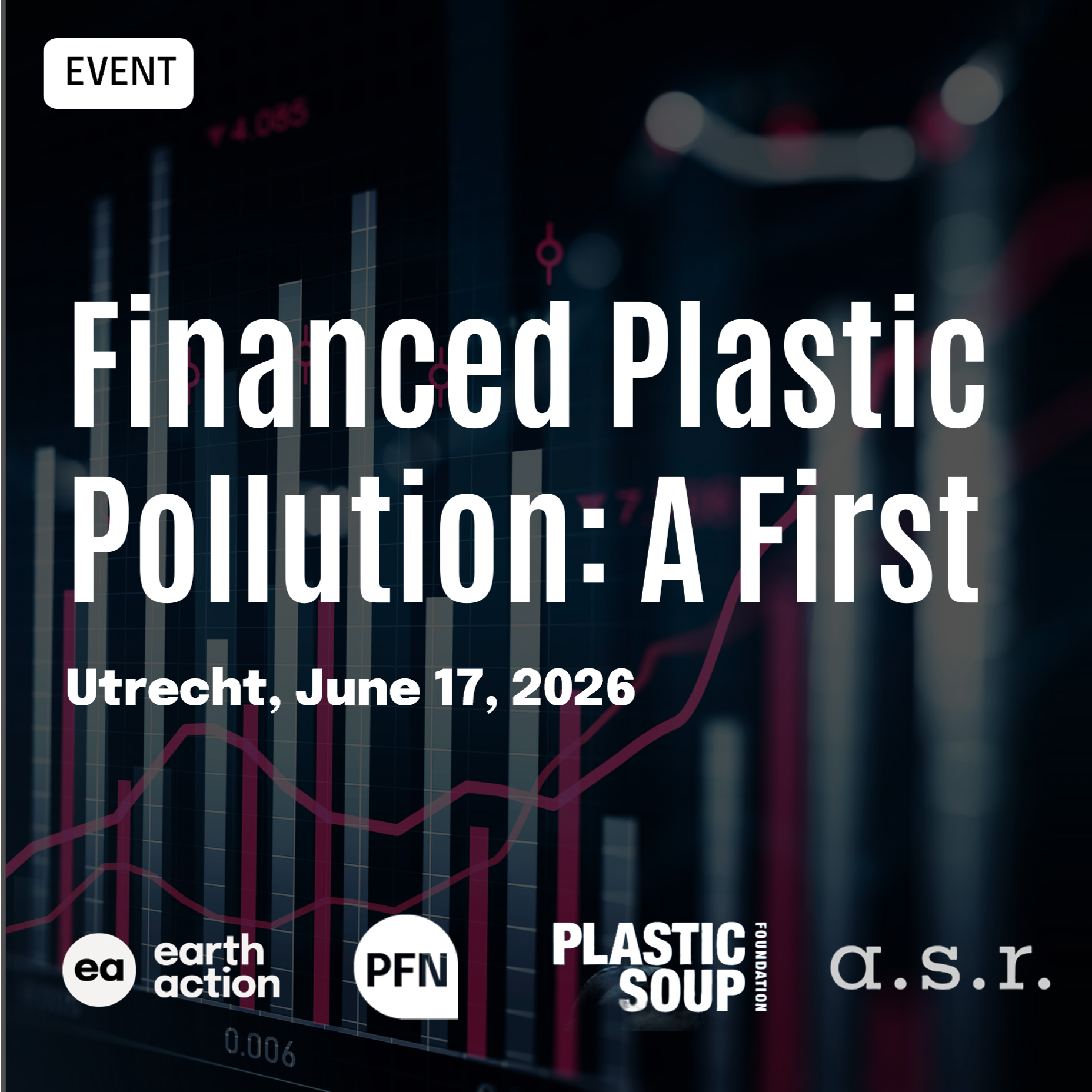
EA presents financed plastic pollution methodology with a.s.r. in Utrecht
On June 17, EA presented a new methodology to measure plastic pollution in investment portfolios, developed in collaboration with a.s.r. and the Plastic Soup Foundation. a.s.r. is the first financial institution to apply the approach, first piloting it across 31 companies in its portfolio, then scaling to hundreds of companies.
Modelled on the PCAF standard for financed emissions, the methodology gives financial institutions a way to quantify the plastic pollution embedded in their holdings and assess associated health risks at the sector level. It will be published as a module of the Plastic Footprint Network (PFN), going through PFN’s Scientific Committee review process to become an open, citable standard for the financial sector.
“Translating the logic of financed emissions into plastic pollution required building entirely new data layers — from mismanaged waste indices at country level to a plastic performance score grounded in CDP reporting. The result is a methodology that is transparent, replicable, and ready to be used by other financial institutions,” said Riccardo De Gennaro, PhD, Data Specialist at EA and lead developer of the methodology.
In Case You Missed It
Catch up on key reports, articles and consultations:
Plastic production cuts are achievable without waiting for a global treaty
Bending the Curve
EIA modelling finds that a coalition of high-ambition countries acting alone could reduce plastic production 16–18 per cent below business-as-usual by 2040. Extending that coalition to include China and middle-ground countries could cut production by up to 45 per cent, with proportional reductions in waste generation and climate emissions.
Microplastics detected deep in living tissue for the first time without dissection
Microplastics mapped in living tissue for the first time
UCL, Kingston University, and University of Birmingham researchers used photoacoustic imaging — laser pulses absorbed by microplastics’ unique optical signature, converted to sound waves — to map particles deep in living mouse tissue. The technique tracked movement and accumulation over two months non-invasively, the first time microplastics’ native optical properties have been exploited for in vivo detection.
Selective recycling technologies offer a path toward circular plastics
Towards selective recycling technologies for complex plastic waste
A review in Nature Reviews Materials finds that real-world plastic waste streams — typically heterogeneous and contaminated — remain poorly served by recycling technologies developed for idealised single-polymer systems. The authors highlight selective dissolution, depolymerisation and catalyst-based approaches as promising pathways to recover higher-value materials from complex waste streams.
Plastic pollution’s effects on biodiversity remain poorly understood despite pervasive exposure
The effects of plastic pollution on biodiversity
A review in Nature Reviews Biodiversity assesses current evidence on how plastic pollution affects organisms across ecosystems. While acute and chronic individual-level impacts are documented, clear ecosystem-level causal links remain limited, highlighting the need for more standardised methods and long-term monitoring.
SBTi shifts from target-setting to implementation
SBTi Net-Zero Standard V2.0
After two years of consultation and review, the Science Based Targets initiative (SBTi) has officially released Version 2.0 of its Corporate Net-Zero Standard. The revised framework marks a significant evolution from target setting toward implementation, with clearer expectations around delivery, accountability and transition planning.
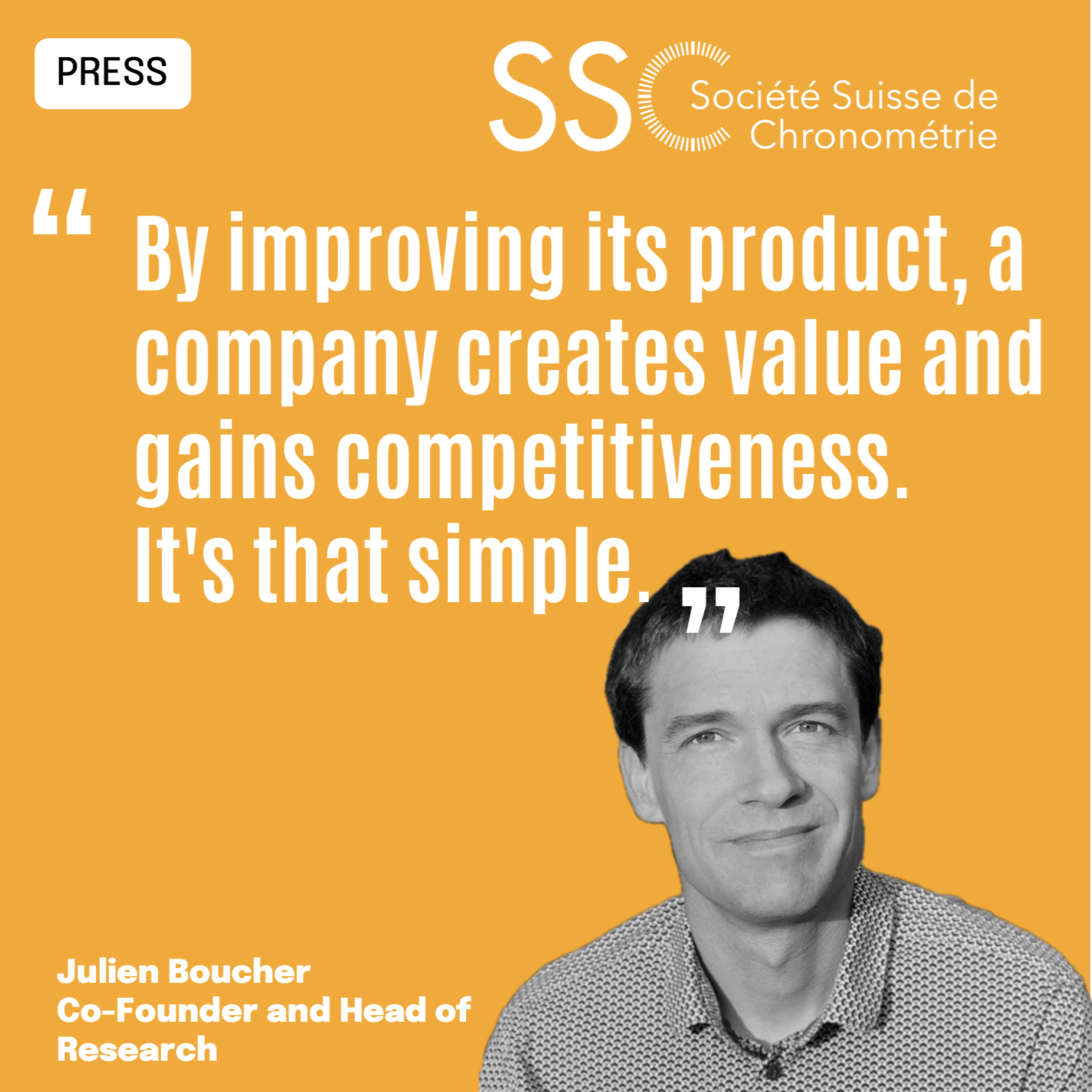
Watchmaking sustainability: Julien Boucher shares his vision
Earth Action is featured in Bulletin SSC n°101 (June 2026), in a special report on sustainability in the Swiss watchmaking industry. Julien Boucher shares his vision of ecodesign as a driver of competitiveness and value creation for the entire sector.
On our radar
Beyond our own work, we track key policy moves, insights, and analysis shaping the sustainability agenda. This section spotlights external developments and perspectives we think are worth your attention.
The signal is loudest in the United States. The SEC has proposed a full withdrawal of its climate disclosure framework, and the EPA has moved to unwind the country’s first federal PFAS drinking water limits, widening the gap with European and Swiss regulators moving in the opposite direction. The improvisation is real but partial: California’s first Scope 1 and 2 GHG disclosures fall due on 10 August, advancing on schedule despite a constitutional challenge before the Ninth Circuit. As Washington steps back, Sacramento holds, for now.
The same question, who governs when established frameworks waver, is playing out in voluntary standards. SBTi’s revised Net-Zero Standard introduces a “best-efforts” compliance pathway for companies that miss targets, softening a framework that previously offered no such flexibility. CDP has split into a private equity-backed commercial entity and an independent foundation, following a first recorded decline in company participation. These two developments invite reflection on the real robustness of sustainability labels, and on what it would take to strengthen them.
At the multilateral level, neither retreat nor improvisation fully captures the picture: the process is simply stalling. Climate talks resumed in Bonn with the Belém outcome largely unimplemented. The plastics treaty will reconvene late June informally in Nairobi after the Geneva collapse, less as a negotiation than a test of survival. And textile waste, a chemically complex, plastic-dominant stream expanding rapidly alongside fast fashion, continues to cross borders outside any effective international framework. The next INC session offers a chance to close that gap, though whether negotiators can agree fast enough remains an open question.
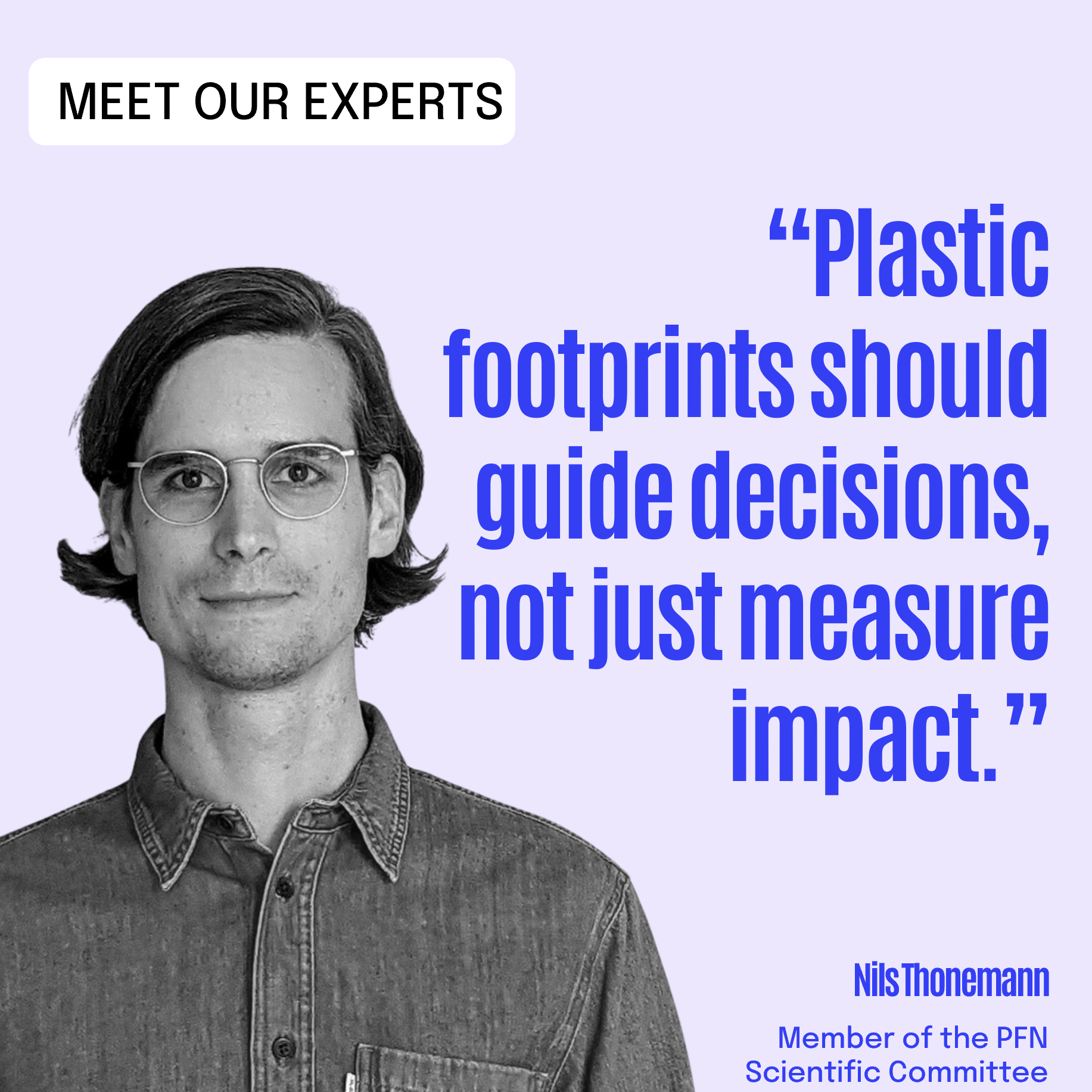
Guiding action across the plastic lifecycle
Plastic footprints are more than the weight of materials — they must reflect real environmental outcomes. Nils Thonemann, PFN Scientific Committee member, explains how life-cycle thinking and robust LCA methods help translate plastic use into meaningful, decision-relevant insights.
By improving how impacts, particularly on land, are represented and by connecting metrics to climate and toxicity indicators, Nils shows how footprints can guide businesses and policymakers to focus on the most effective interventions. PFN’s collaboration and methodological guidance are key to making plastic footprinting both scientifically rigorous and practically useful.
Thank you for reading the latest Earth Action Newsletter! If you found this issue valuable, please forward it to colleagues and invite them to subscribe!
Have ideas on how to make this newsletter more valuable to you? Let us know!


©EA – Earth Action SA
Lausanne, Ch. des Vignes d’Argent 7, 1004 Lausanne, Switzerland
You are getting this note because you subscribed to hear from Earth Action.
Don’t want to hear from us anymore ? Unsubscribe