

News, stories and insights
September 24th 2026
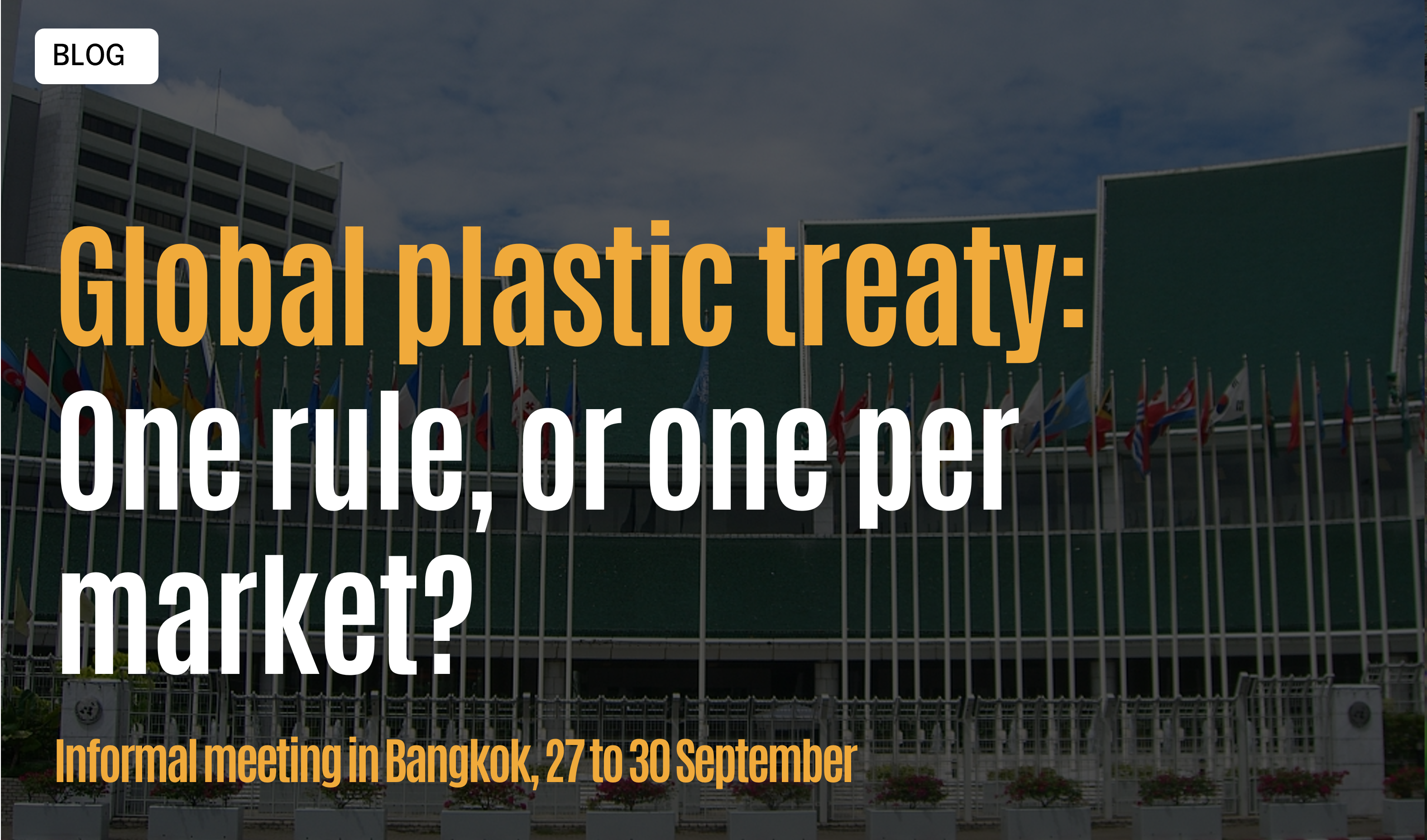
One rule to comply with, or one per market?
Most coverage of the plastics treaty is about what it will ban. For anyone placing plastic on several markets, the more consequential question is a different one. Will there be one rule, or a different rule in each country?
The draft delegations are taking to Bangkok this week leaves that open, inside a single bracketed sentence of Article 4. One version judges a product on what it is. The other judges it on how well the local waste system works, which means the same product can be caught in one market and not in the next.
Five minutes on what has changed in the draft, how it would reach companies through rules already in force, and what to plan against before March 2027.

Guidance Before the Rule: What September’s Reporting Updates Mean for Companies
Same week, two continents: the EU published its Simplified ESRS in the Official Journal while EFRAG’s 530-datapoint implementation list stays open for correction until 23 October, and California’s CARB opened a voluntary SB 253 platform while its own governing regulation still awaits approval. Neither is a simplification story. Both show regulators issuing operational guidance before the underlying rule is final.
Our read: the instability is in the drafts, not in the question they’re trying to answer. Companies that build data systems around where emissions and materials actually flow, not around one specific datapoint list, won’t need to rebuild each time the draft changes.
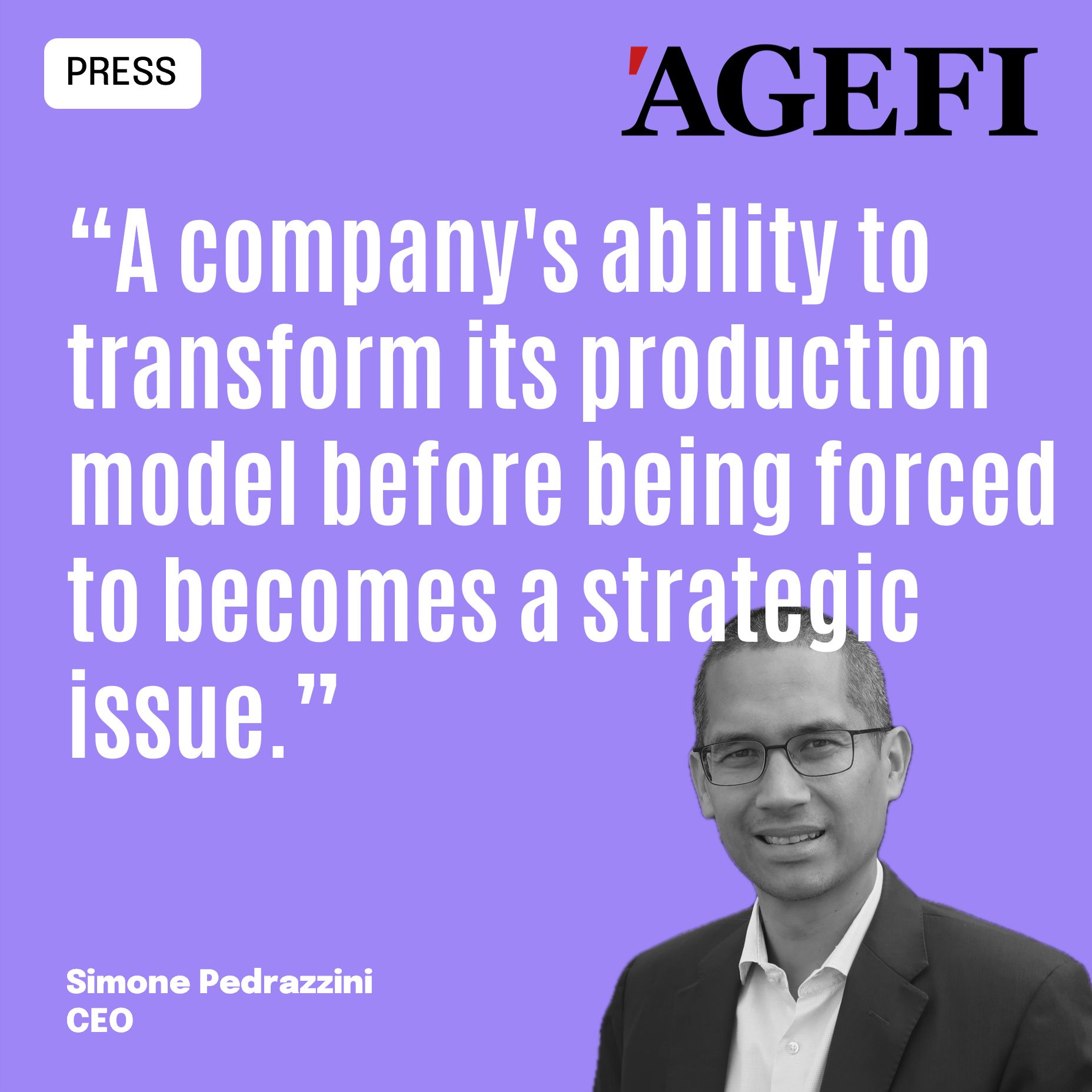
Agefi Finance: from impact to financial resilience
In Agefi Finance’s September 2026 special report on sustainable finance, Simone Pedrazzini, CEO of Earth Action, argues that measuring the carbon or plastic footprint of investments is no longer enough. Sustainable finance also needs to assess how resilient financed companies are to the transformations ahead, whether that means tightening regulation, emerging litigation, or shifting raw material costs.
A company able to transform its production model before being forced to, he argues, is better positioned to create value in a world facing growing constraints.
EA Earth Action, a partner in programs decarbonizing Swiss SMEs
In Switzerland, Banque Cantonale du Jura has launched Boost PME, a program supporting SMEs through their responsible transition. It combines financing for renovations meeting Minergie standards, a PEIK energy audit, a decarbonization roadmap, and skills-based support delivered through i-moutier. EA Earth Action is part of i-moutier’s partner network, alongside Énergie du Jura, Energys, and Climate Services.
Through these joint programs, EA contributes to companies’ sustainability diagnostics and to defining their concrete decarbonization actions, a role that takes shape very concretely in the Jura region through actors such as BCJ.
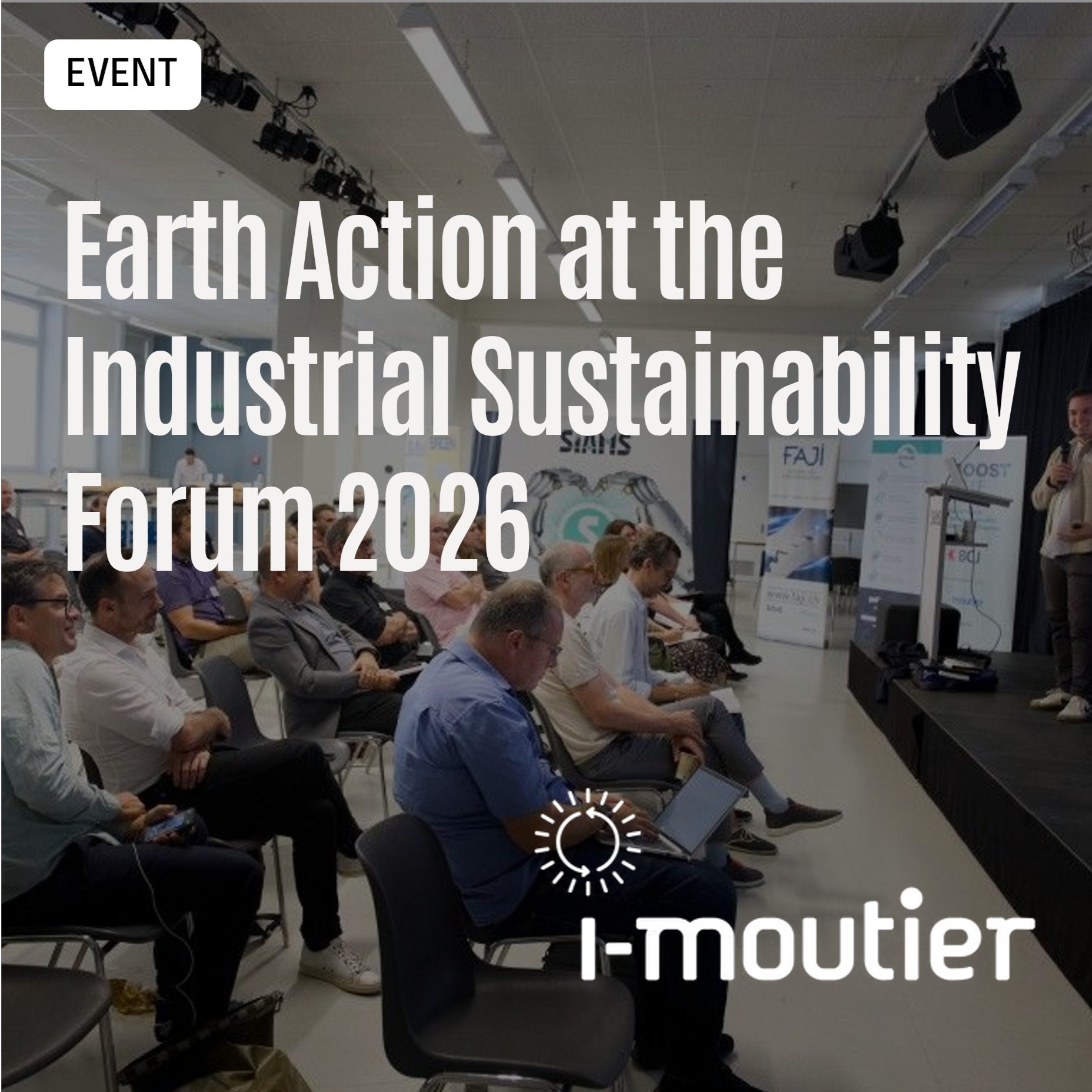
Earth Action at the Industrial Sustainability Forum in Moutier
Earth Action took part in the Industrial Sustainability Forum in Moutier, a day built around energy efficiency, responsible supply chains and circular economy. What stood out was the enthusiasm in the room: an active, close-knit community where sustainability gets discussed in practical terms.
We met several of our clients there and had good exchanges with speakers such as Christian Petit and Nicolas Freudiger, both driving forward on measurable, hands-on impact. A good reminder of why we do this work. See you in 2027.
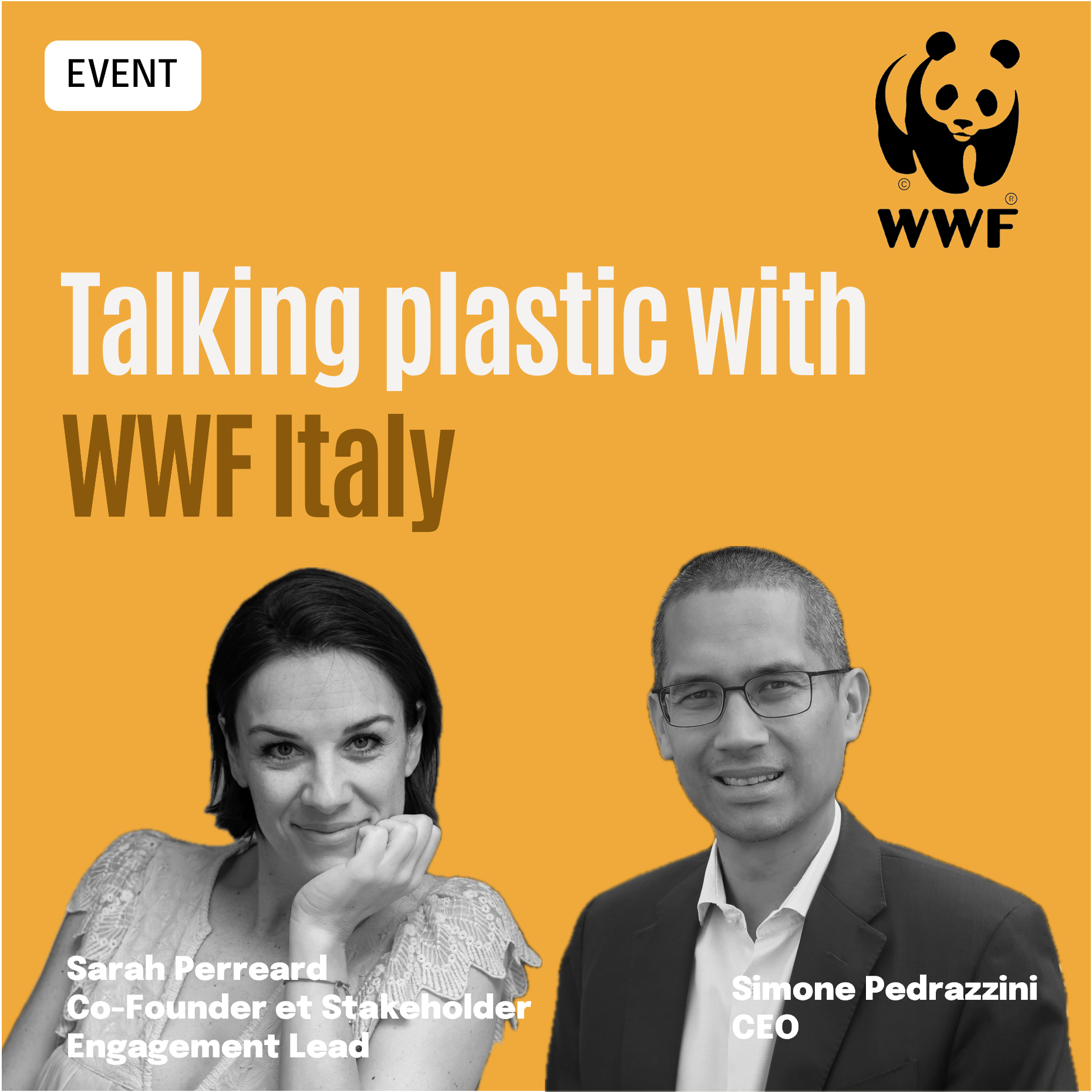
Earth Action x WWF Italy, Milan
Earth Action joined WWF Italy for an event in Milan, the first EA event held in Italy. It was opened by Simone Pedrazzini, new CEO. Giorgio Bagordo, senior expert at WWF Italy, introduced Plastic Overshoot Day (POD) in the context of their No Plastic in Nature program, and Sarah Perreard, co-founder of Earth Action, presented the report “From Shedding to Solutions” work on microfibre pollution.
The event was an opportunity to connect POD’s data with concrete solutions to plastic in nature, and to exchange with WWF Italy on the topic.

Produrable 2026, Paris
Earth Action will be at Produrable in Paris this year, on 30 September and 1 October at the Palais des Congrès. It’s the biggest sustainability event in Europe, bringing together thousands of people working on the transition to a more sustainable economy.
Julien Boucher, EA’s co-founder and Head of Research & Science, will be attending both days, focusing on the sessions covering circularity, production and consumption, in line with his work on plastic pollution and life cycle assessment. If you’re attending too, make sure to connect with us.
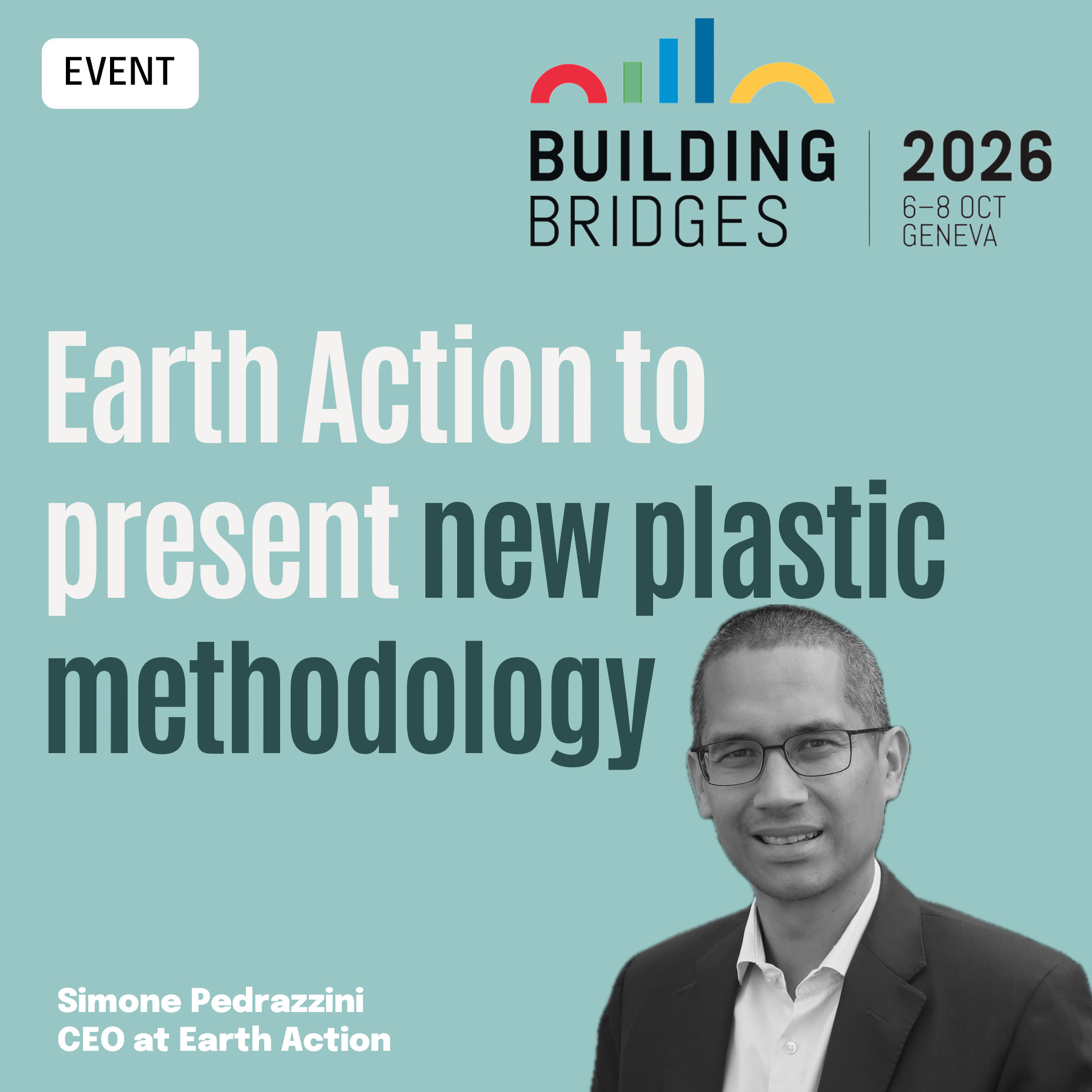
Earth Action at Building Bridges Launchpad 2026
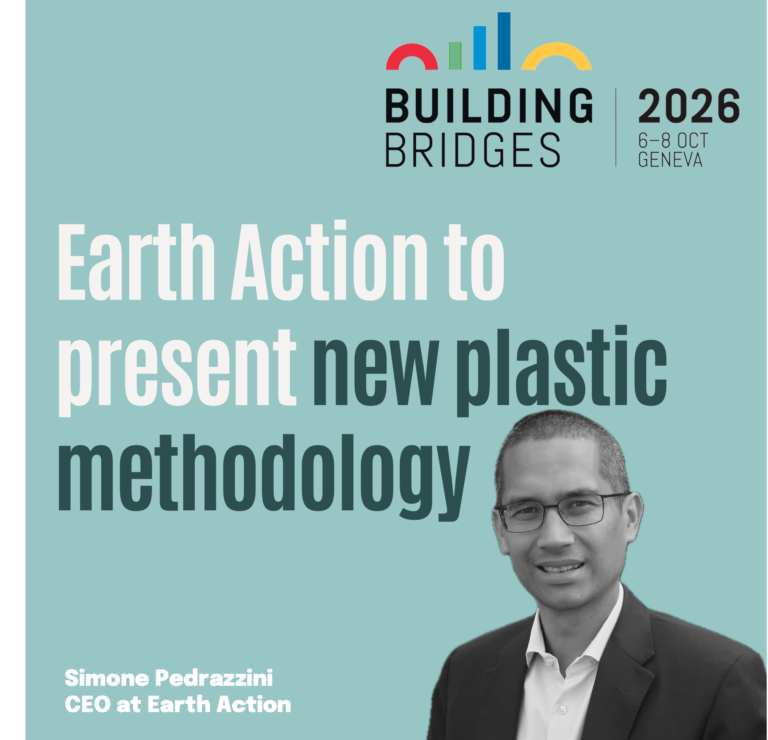
On 6 October 2026, Earth Action will take the stage at the Building Bridges Launchpad in Geneva to present a new methodology enabling investors to measure the plastic pollution they finance. Built in the Plastic Footprint Network format, it extends the logic of existing carbon accounting methodologies, such as the Partnership for Carbon Accounting Financials, to plastic.
The session, moderated by Lucy Fitzgeorge-Parker, Editor in Chief of Responsible Investor, is part of the program dedicated to sustainable finance innovations. The methodology was co-developed with a.s.r. asset management and the Plastic Soup Foundation, and piloted by a.s.r. on its own portfolio. EA expects to share further details at the event alongside a.s.r. and CDP, formerly the Carbon Disclosure Project.
Textile Exchange 2026, Vancouver
EA will also be at the Textile Exchange Conference in Vancouver, from 12 to 16 October at the Vancouver Convention Center. This year’s edition is built around implementation, scaling what already works across businesses, supply chains and landscapes.
It’s a useful setting for EA’s work on textiles, from microfibre shedding and sludge management to plastic footprinting and life cycle assessment.
In Case You Missed It
Catch up on key reports, articles and consultations:
Pregnancy and breastfeeding linked to lower serum PFAS levels in women
Serum concentrations of legacy, alternative, and precursor per- and polyfluoroalkyl substances: a descriptive analysis of premenopausal participants in the Canadian CARTaGENE cohort
Among 2,775 participants in the Canadian CARTaGENE cohort, serum concentrations of PFOS, PFNA, PFOA and PFHxS decrease steadily with number of children and reported breastfeeding duration, a pattern consistent with pregnancy and breastfeeding as elimination pathways for these compounds in mothers. Read the article
PFOA increases proliferation of human ovarian cancer cells in the lab
Integrative network toxicology and molecular docking reveal epigenetic and endocrine-disrupting mechanisms of PFAS in ovarian cancer
A network toxicology and molecular docking approach covering ten PFAS compounds identifies 1,042 interactions with human proteins converging on eight key genes, including HDAC1, SIRT1 and ESR1. Tested on human ovarian tumour cells, PFOA increases cell proliferation and migration. Read the article
Microplastic detection in human lung tissue rises from 19% to 77% between 1991 and 2024
Microplastics in human lung tissue from autopsy samples collected in 1991 and 2024: a comparative post-mortem study
Using low-drift infrared spectroscopy, microplastics are detected in 19% of archived lung tissue samples taken in 1991, versus 77% of those taken in 2024. The study draws a direct temporal comparison on archived human tissue, without establishing a causal link to any specific health effect. Read the article
About 219 tonnes of microplastics settle from the atmosphere each year in Switzerland
Wet and dry atmospheric deposition of microplastics at urban, suburban, rural and mountainous sites in Switzerland
A one-year study across five Swiss sites found microplastic deposition from air was twice as high in Zurich as elsewhere, adding up to about 219 tonnes deposited nationally each year, more than atmospheric input rivals wastewater as a source to rivers and lakes. Read the article
A new method isolates over 85% plastic microfibres from dryer lint
Plastic extraction from dryer lint (PEDL): a low-tech, mass-based approach to quantify plastic microfibers in complex dryer lint
The PEDL method, based on sulfuric acid digestion followed by bleach, removes over 93% of cellulosic fibres and 95% of animal fibres from a dryer lint sample. Plastic microfibres then make up over 85% of the remaining mass, compared to about 30% before treatment. Read the article
Swiss wastewater treatment plants discharge about 4.7 tonnes of microplastics a year into surface waters
Microplastic Particle Loads Discharged by Swiss Wastewater Treatment Plants
The first national survey covering 51 Swiss wastewater treatment plants, representing about 44% of the country’s population. The study estimates national microplastic discharge to surface waters at 4.7 tonnes per year, based on an analysis of sewage sludge rather than treated water.
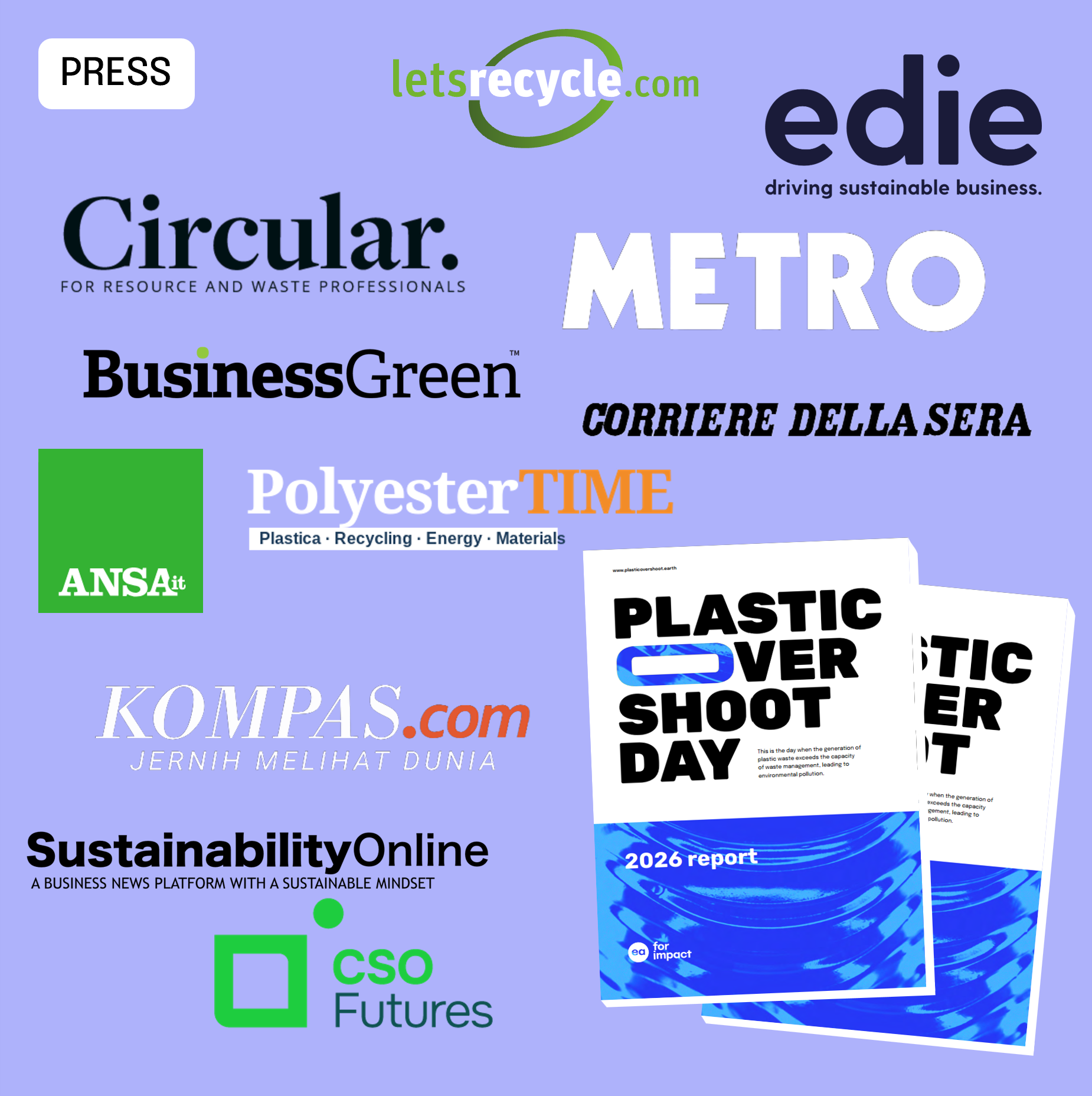
Plastic Overshoot Day makes waves in the press
Earth Action’s Plastic Overshoot Day report drew international press attention this month. Coverage included UK outlets Metro, BusinessGreen and edie, Italian dailies Corriere della Sera and ANSA, specialist waste and recycling titles such as Circular Online and letsrecycle.com, and pickup as far as Indonesia’s Kompas.com, one of the country’s leading national news sites. Read the full Plastic Overshoot Day report here.
On our radar
Beyond our own work, we track key policy moves, insights, and analysis shaping the sustainability agenda. This section spotlights external developments and perspectives we think are worth your attention.
The same gap opened on both sides of the Atlantic this month: companies are receiving compliance instructions before the rules underpinning them are settled.
EFRAG published its 2026 list of ESRS datapoints, consolidating 530 items from the revised standards the Commission adopted in July. It carries no force as implementation guidance: it is secretariat support material, open to fatal-flaw review until 23 October. A second implementation layer opened alongside it: EFRAG put the draft ESRS XBRL taxonomy out for consultation until 11 November. The standards themselves cleared their own hurdle this month, with the Simplified ESRS and the voluntary reporting standard published in the Official Journal on 21 September after Parliament and Council let the scrutiny period lapse, unchanged from the July text. Three days after EFRAG’s original publication, California’s Air Resources Board issued guidance for the first SB 253 reporting cycle and opened a voluntary intake platform for Scope 1 and 2 submissions, ahead of the 10 November deadline. Again, no new obligations, and a regulation still awaiting approval from the Office of Administrative Law.
The rest of the European picture was implementation. Member states filed draft national restoration plans on 1 September, and on the 11th the Commission concluded, in a report on battery recycling, that current recovery and efficiency thresholds did not need tightening.
On the plastics treaty, heads of delegation met virtually on 8 and 9 September to prepare the second informal in-person meeting, running in Bangkok from 27 to 30 September. Excluded from the Nairobi round in July, accredited observers were this time invited to submit written views, published as received.
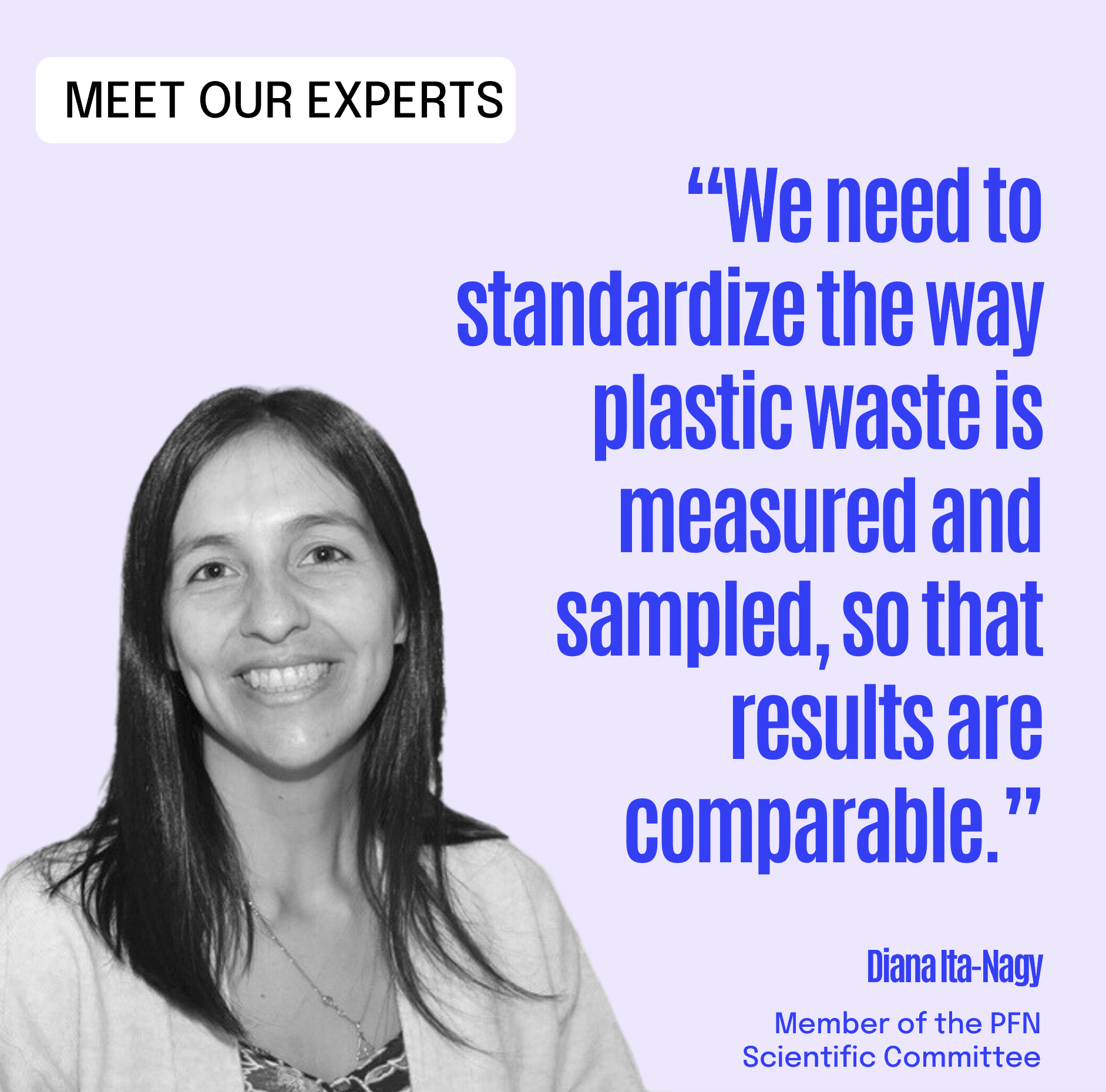
Where the data runs out: insights from Diana Ita-Nagy on measuring plastic footprints
Every plastic footprint is built on what somebody wrote down, and the records thin out fast once plastic leaves a managed system. Diana Ita-Nagy, PFN Scientific Committee member and industrial ecology researcher at the Pontificia Universidad Católica del Perú, works on the part nobody has a receipt for: where plastic goes after collection stops, how much of it reaches rivers and the sea, and why two teams sampling the same waste stream can come back with figures that cannot sit in the same table. Her work spans life cycle assessment, material flow analysis, and methods built for places where waste management is largely informal.
Standardized measurement, she argues, is what turns a footprint into a baseline that companies and governments can actually act on.
Thank you for reading the latest Earth Action Newsletter! If you found this issue valuable, please forward it to colleagues and invite them to subscribe!
Have ideas on how to make this newsletter more valuable to you? Let us know!


©EA – Earth Action SA
Lausanne, Ch. des Vignes d’Argent 7, 1004 Lausanne, Switzerland
You are getting this note because you subscribed to hear from Earth Action.
Don’t want to hear from us anymore? Unsubscribe