

News, stories and insights
April 2nd 2026
Turning plastic action into measurable impact
The Plastic Footprint Network (PFN), convened by Earth Action, has launched the Plastic Pollution Mitigation Action Framework (PAF), a new methodology to help companies measure and report their plastic mitigation efforts.
While many organizations track their plastic footprint, a key gap has remained: how to credibly account for actions that reduce plastic leakage. The PAF fills this blind spot by making mitigation measurable, comparable, and aligned with existing standards and emerging regulations.
Developed through a rigorous, multi-stage consultation process, it provides companies with a practical tool to strengthen strategy, improve transparency, and drive meaningful action. Pilot projects with leading brands will further refine its application.
No good data, no real progress
Recycling targets for packaging are rising fast—but are we truly making progress? In this article, Sarah Perreard and Yoni Shiran highlight a critical yet overlooked barrier: data quality.
Today’s packaging data is often fragmented, inconsistent and too high-level to guide real decisions. This makes it harder to prioritise action, direct investment and measure impact. Yet key choices—from design to policy—depend on it. To move forward, the sector needs a shared, reliable and comparable data foundation.
Initiatives like the Packaging Data Hub are helping to build that common ground and enable more effective, credible circular economy strategies.
Swiss finance: the invisible impact that extends far beyond our borders
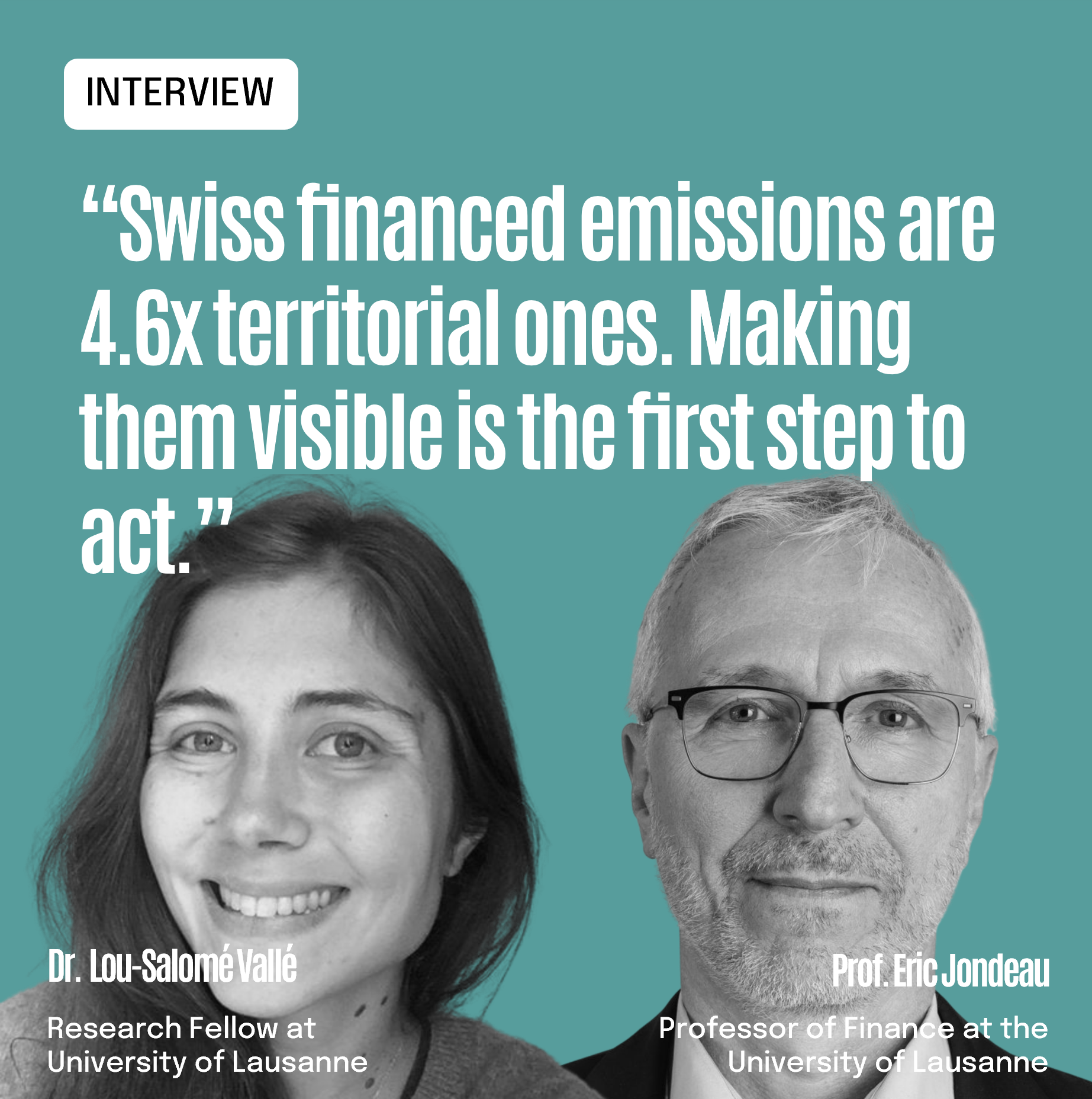
A new study reveals that the carbon footprint of Swiss finance is four times larger than the country’s territorial emissions. By developing a “look-through” method to trace capital through financial intermediaries, authors Lou-Salomé Vallée and Eric Jondeau quantify these “financed emissions” at 193 MtCO₂e.
This systemic approach highlights the shared responsibility of financial institutions in global environmental impacts.
It provides policymakers and investors with a crucial tool to identify leverage points, integrate climate risks, and redirect capital flows toward sustainable activities, complementing traditional consumption- or territory-based metrics.
Plastic Footprint Network: New technical modules on agriculture and tires
The Plastic Footprint Network continues to expand its technical foundation with the release of new modules focused on agriculture and tires. These additions strengthen the existing suite of technical modules, which already cover key areas such as packaging, textiles, fishing gear, waste export, and release rates.
Designed to support the operational and methodological aspects of plastic footprinting, the modules provide detailed system maps, calculation routes, and datasets.
By addressing both macroplastic and microplastic sources, the updated framework offers a more comprehensive understanding of plastic leakage across sectors, helping organizations refine their assessments and drive more effective reduction strategies.
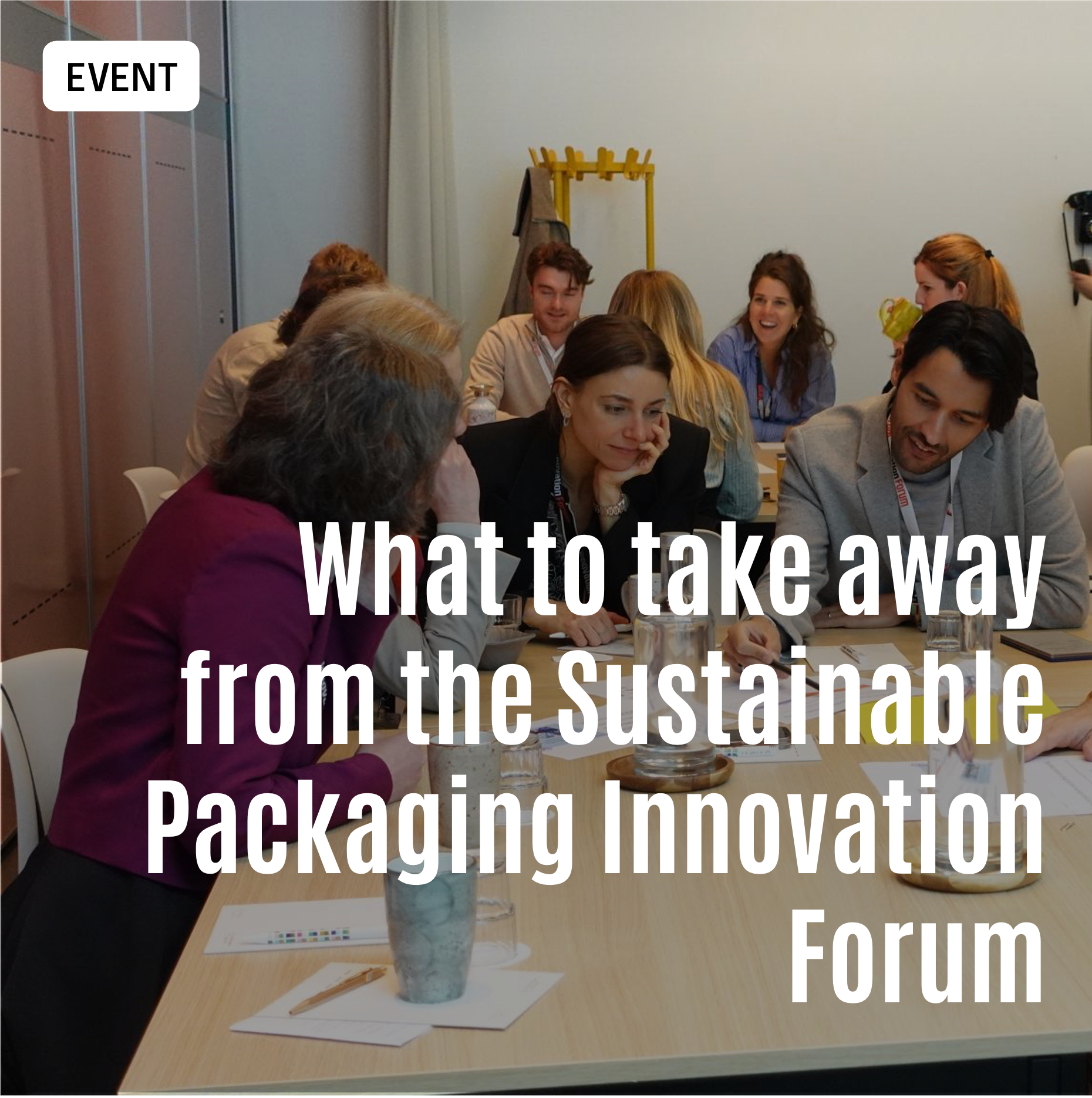
PPWR: Optimists or Pessimists?
In 2026, the European Packaging and Packaging Waste Regulation (PPWR) enters its implementation phase, with requirements set to progressively ramp up: recyclability, recycled content, eco-modulation, packaging reduction, and the scaling of reuse.
At the recent Sustainable Packaging Innovation Forum in Amsterdam, the topic was everywhere — on stage and in the corridors alike. On one side, the pessimists, held back by methodological uncertainties, tight timelines, and the scale of transformation required.
On the other, the optimists, who see it as a reason to rethink portfolios and invest in circular models. One thing became clear, notably during our Packaging Data Hub workshop: to act effectively, the industry will need better data to understand collection, sorting, recycling, and the end-of-life of packaging.
Imperfect and still evolving, perhaps… but one thing is certain: PPWR is setting the industry in motion.
Building the transition with SMEs: Insights from the CVCI Sustainability Forum
Attending the CVCI Sustainability Forum was a chance to reconnect with what makes our region strong: SMEs that are engaged, curious, and ready to take action. Throughout the discussions, the same needs kept emerging—clarifying priorities, measuring impact, structuring the transition.
At Earth Action, this is exactly where we step in, with our expertise in climate strategy, LCA, and organizational support. An inspiring moment that reinforces one message: the transition is something we build together.
In Case You Missed It
Catch up on key reports, articles and consultations:
Nanoplastics may interact with brain proteins linked to neurodegenerative diseases
The hidden world of nanoplastics colliding with neurodegenerative diseases
Researchers identify a potential link between nanoplastics and neurodegenerative conditions such as Parkinson’s disease and dementia. Certain polymers appear to interact with alpha-synuclein, a protein associated with neuroinflammation and cognitive decline, highlighting the need to better understand exposure pathways and polymer-specific risks.
Microplastics detected in children suggest diet may influence early-life exposure
Study finds widespread microplastics in children and suggests diet may shape exposure
Analysis of urine samples from over 1,300 children shows widespread microplastic exposure, with variations linked to dietary patterns. The findings suggest food consumption may influence exposure pathways, raising questions about how microplastics enter the body and their potential accumulation and long-term health implications.
Milk-based biodegradable film shows potential as an alternative to plastic packaging
Biodegradable packaging film developed from milk protein
Researchers developed a biodegradable packaging film combining milk protein, starch and natural nanoclay. The material mimics the properties of conventional plastic while fully degrading in soil within weeks, offering a potential alternative for single-use packaging if scalability and performance can be validated.
Microplastics in soil create microbial hotspots that may alter ecosystem functions
Microplastics are creating tiny microbial battlegrounds in farm soil
Microplastics in soil form biofilm-based communities known as plastispheres, where microorganisms interact on plastic surfaces. These environments can influence microbial behaviour, nutrient cycling and soil resilience, suggesting that plastic pollution may have broader implications for soil health and agricultural systems.
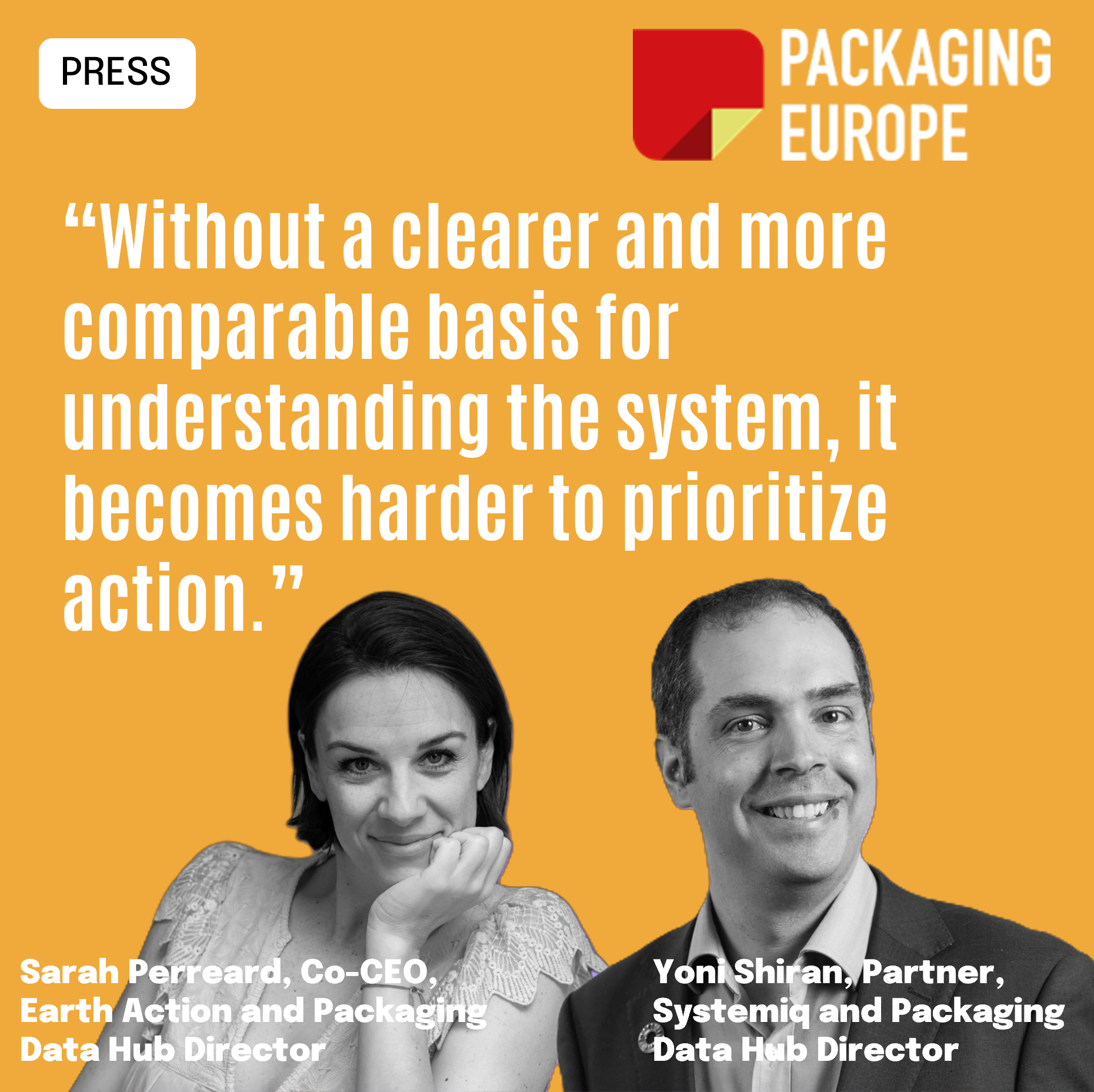
Sarah Perreard and Yoni Shiran in Packaging Europe.
On the launch of the Packaging Data Hub, Sarah Perreard, Co-CEO of Earth Action, and Yoni Shiran, Partner at Systemiq, shared their insights in the first article of Packaging Europe’s new series, The packaging data problem. They highlight the challenges of packaging data and the need for reliable solutions to drive sustainability.
Earth Action featured in Mongabay
Earth Action was cited in Mongabay in the article Plastic, from home and abroad, spills into Türkiye’s waters. The piece highlights how both local and imported plastic waste are affecting Türkiye’s coastal ecosystems and features insights from our recent research on pollution sources and mitigation strategies.
On our radar
Beyond our own work, we track key policy moves, insights, and analysis shaping the sustainability agenda. This section spotlights external developments and perspectives we think are worth your attention.
Sustainability governance is increasingly defined by the friction between regulatory idealism and operational reality. The European Commission recently exempted pallet wrapping films and straps from the strict 100% reuse targets of the Packaging and Packaging Waste Regulation.
This decision acknowledges that full reuse for specific transport items remains technically and economically unfeasible without causing supply chain disruptions. While these items still fall under broader 2030 targets, the move signals a shift toward pragmatic implementation over rigid mandates.
Political polarization in the United States is similarly forcing financial actors to recalibrate their strategies. Vanguard agreed to a $29.5 million settlement to resolve an antitrust lawsuit alleging anti-competitive ESG activism. The agreement reinforces the firm’s status as a passive investor and highlights the growing legal risks asset managers face when navigating climate-related political pressures. Yet this retreat in rhetoric does not necessarily indicate a collapse in commitment.
Analysis of 75 global firms reveals that only 19% have genuinely scaled back climate goals, suggesting that “greenhushing” is more prevalent than actual strategic abandonment.
Despite these headwinds, market norms and national policies continue to drive accountability. In New Zealand, plastic packaging was designated a priority product to mandate producer stewardship, shifting from voluntary measures to enforced lifecycle responsibility.
Furthermore, surveys indicate that 90% of companies exempted from recent EU reporting simplifications plan to maintain their disclosure practices. This trend suggests that sustainability data has become a core market requirement driven by value chain pressure rather than mere legal compliance.
Global governance reflects this same resilience amidst fatigue, as recent reports note institutional advances in adaptation goals even as multilateralism faces profound strain.

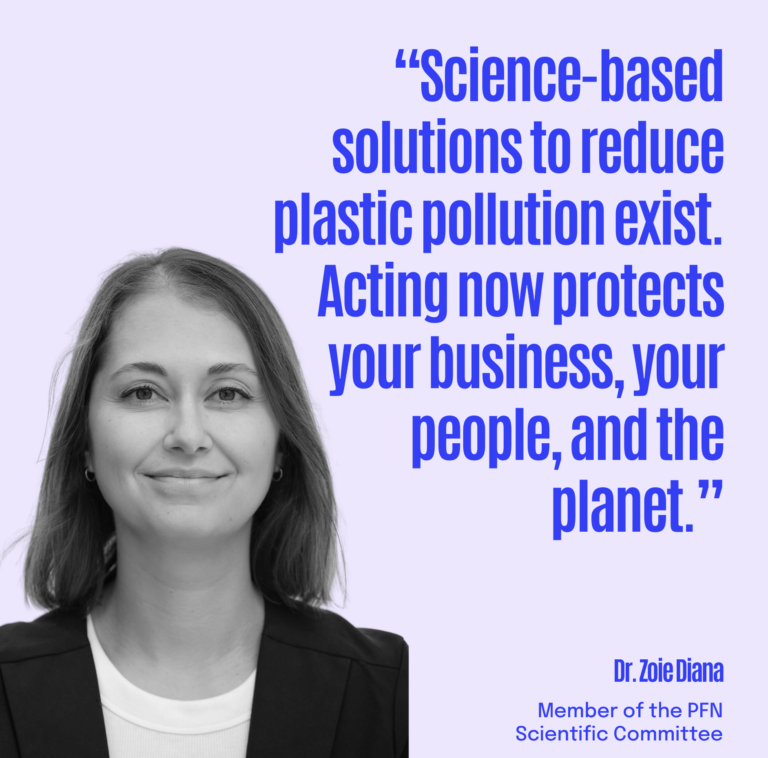
Tackling tricky microplastics: insights from Zoie Diana
Zoie Diana, PFN Scientific Committee member, explains why “tricky microplastics” from tires, paints, and fibers are often overlooked. Her work combines method development, data analysis, and cross-sector collaboration to help organizations identify hotspots, design interventions, and reduce plastic pollution with evidence-based, life-cycle-informed strategies.
Thank you for reading the latest Earth Action Newsletter! If you found this issue valuable, please forward it to colleagues and invite them to subscribe!
Have ideas on how to make this newsletter more valuable to you? Let us know!


©EA – Earth Action SA
Lausanne, Ch. des Vignes d’Argent 7, 1004 Lausanne, Switzerland
You are getting this note because you subscribed to hear from Earth Action.
Don’t want to hear from us anymore ? Unsubscribe